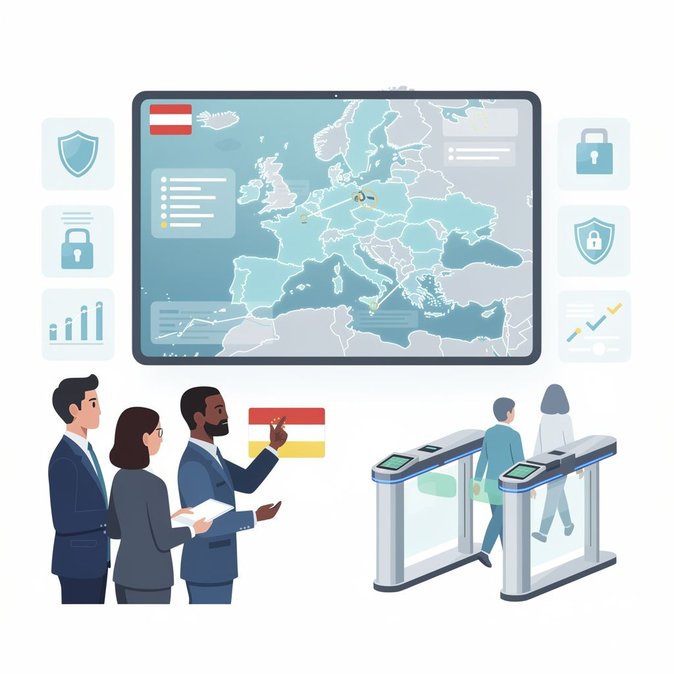
Justice and Home-Affairs counsellors from all EU member states, including Austria, convened in Brussels on 16 June for the IXIM Working Party on Information Exchange.
If you’re concerned about how the forthcoming EES and ETIAS rules will affect your corporate or personal travel plans, VisaHQ can streamline the paperwork. The platform’s Austria portal (https://www.visahq.com/austria/) offers up-to-date guidance on Schengen visa requirements and can pre-screen travellers so that biometric or API mismatches are avoided at the border. Their specialists track developments from working parties like IXIM in real time, sparing users the headaches that come with sudden policy tweaks.
According to documents tabled in the Austrian parliament’s EU database, the session focused on identifying weaknesses in the large-scale IT systems that underpin the Schengen Area—such as the Entry/Exit System (EES), the Visa Information System (VIS) and the forthcoming European Travel Information and Authorisation System (ETIAS). Delegates reviewed a Presidency paper (Council doc 10359/26) that lists 28 technical vulnerabilities ranging from biometric-matching errors to delayed alert propagation between national police servers. Austria, which completed EES pilot operations at Vienna Airport last October, signalled support for stricter uptime targets and real-time monitoring dashboards accessible to all border posts. The meeting also discussed draft guiding questions on cooperation with third-country authorities. Vienna’s representatives urged that any data-sharing agreements include minimum encryption standards, citing lessons learned from last year’s ransomware attack on the Styrian Regional Police Directorate. A revised cooperation accord with Interpol was circulated for comment and is expected to be endorsed before the summer recess. For businesses, the outcome of IXIM negotiations matters because glitch-free EES and ETIAS platforms will determine queue lengths at airports and land crossings once the systems go fully live in 2026-27. Travel managers should track forthcoming Council conclusions, as they are likely to translate into new carrier-API obligations and stricter pre-boarding verification rules for non-EU nationals. Although highly technical, Austria’s active role in the working party underscores the government’s emphasis on digital border security as an alternative—or complement—to physical checkpoints, a stance consistent with its recent extension of mobile internal controls.
If you’re concerned about how the forthcoming EES and ETIAS rules will affect your corporate or personal travel plans, VisaHQ can streamline the paperwork. The platform’s Austria portal (https://www.visahq.com/austria/) offers up-to-date guidance on Schengen visa requirements and can pre-screen travellers so that biometric or API mismatches are avoided at the border. Their specialists track developments from working parties like IXIM in real time, sparing users the headaches that come with sudden policy tweaks.
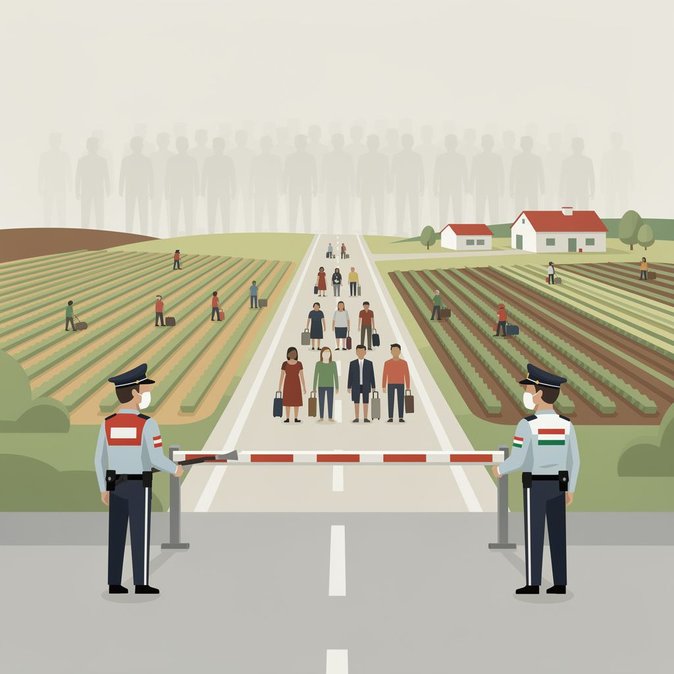
According to documents tabled in the Austrian parliament’s EU database, the session focused on identifying weaknesses in the large-scale IT systems that underpin the Schengen Area—such as the Entry/Exit System (EES), the Visa Information System (VIS) and the forthcoming European Travel Information and Authorisation System (ETIAS). Delegates reviewed a Presidency paper (Council doc 10359/26) that lists 28 technical vulnerabilities ranging from biometric-matching errors to delayed alert propagation between national police servers. Austria, which completed EES pilot operations at Vienna Airport last October, signalled support for stricter uptime targets and real-time monitoring dashboards accessible to all border posts. The meeting also discussed draft guiding questions on cooperation with third-country authorities. Vienna’s representatives urged that any data-sharing agreements include minimum encryption standards, citing lessons learned from last year’s ransomware attack on the Styrian Regional Police Directorate. A revised cooperation accord with Interpol was circulated for comment and is expected to be endorsed before the summer recess. For businesses, the outcome of IXIM negotiations matters because glitch-free EES and ETIAS platforms will determine queue lengths at airports and land crossings once the systems go fully live in 2026-27. Travel managers should track forthcoming Council conclusions, as they are likely to translate into new carrier-API obligations and stricter pre-boarding verification rules for non-EU nationals. Although highly technical, Austria’s active role in the working party underscores the government’s emphasis on digital border security as an alternative—or complement—to physical checkpoints, a stance consistent with its recent extension of mobile internal controls.