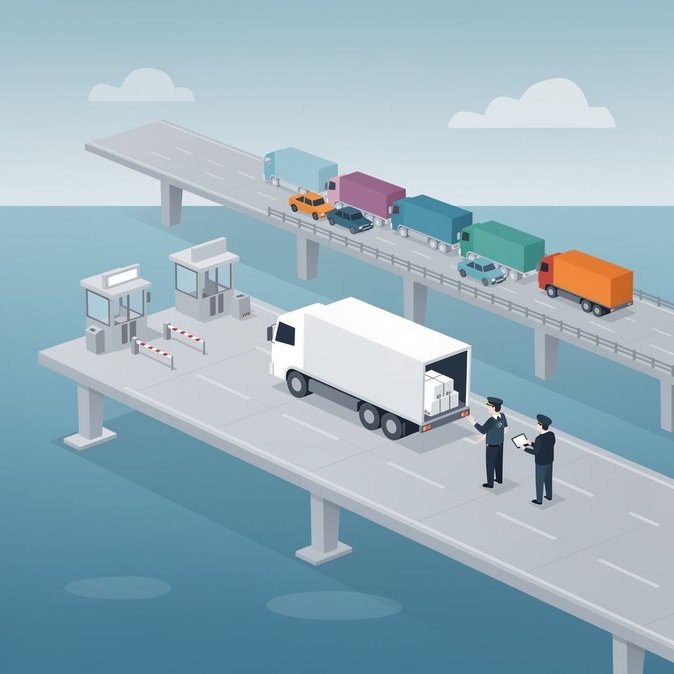
U.S. Customs and Border Protection (CBP) officers at the Blue Water Bridge connecting Port Huron, Michigan with Sarnia, Ontario intercepted 60 kilograms of cocaine during a secondary inspection on 11 June, the agency revealed on 15 June. The bricks of narcotics were hidden inside two cardboard boxes loaded on a transport truck heading to Canada. The driver—an Indian citizen whose name has not been released—faces federal charges in Detroit. CBP said the haul represents a street value of roughly US $4 million and “deals another financial blow to transnational criminal networks attempting to exploit our shared border.” The tractor-trailer and its cargo have been seized pending forfeiture proceedings. Although drug seizures grab headlines, they also have practical mobility consequences for legitimate carriers. The bridge is a vital commercial artery for Ontario’s automotive and agri-food exporters; any security incident that triggers temporary lane closures can cascade into hours-long delays and costly detention fees for time-sensitive freight. Border analysts note that CBP and the Canada Border Services Agency (CBSA) frequently tighten inspection protocols for similar shipments for days after a major bust. Logistics managers moving just-in-time parts across the corridor are advising drivers to build extra buffer time into their schedules this week and to ensure that eManifests and Advanced Commercial Information filings are error-free to avoid being pulled into intensive exams. Companies enrolled in the FAST trusted-trader program are unlikely to face new requirements, but brokers say they should monitor bridge wait-time feeds for any sudden spikes. The incident is also a reminder that Canada-bound trucks are subject to U.S. export enforcement before they even reach Canadian customs. Carriers transporting high-risk commodities such as produce, pharmaceuticals or electronics are encouraged to review their security plans and driver-vetting procedures.
Source: CBS News Detroit