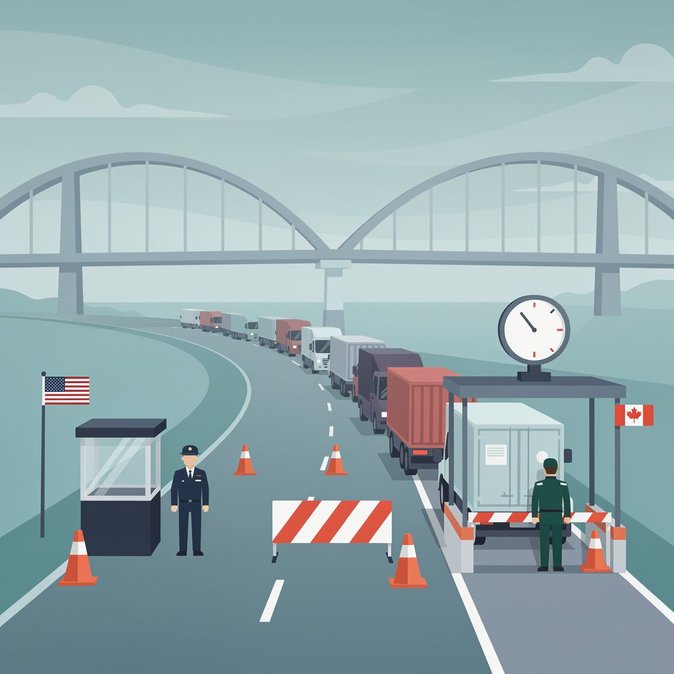
U.S. Customs and Border Protection (CBP) officers stationed near the Blue Water Bridge connecting Port Huron, Michigan and Sarnia, Ontario intercepted 55 bricks of cocaine—worth an estimated US$2.5 million—in a Canada-bound transport truck last Friday. Details of the bust were released yesterday morning (June 15), prompting joint CBP-CBSA measures to increase inspection frequency for commercial vehicles on both sides of the crossing. The driver, an Indian citizen hauling mixed consumer goods, now faces federal drug-smuggling charges. CBP officials said the haul demonstrates traffickers’ willingness to exploit high-volume freight corridors that serve the Great Lakes automotive supply chain. In response, the Canada Border Services Agency (CBSA) has advised carriers that primary-inspection wait times could temporarily double during peak shipping hours this week as officers deploy additional canine units and X-ray imaging. Fleet managers shipping just-in-time parts to Ontario assembly plants are being told to file Advance Commercial Information (ACI) manifests early and build extended border dwell time into delivery schedules. The incident may also influence Trusted Trader program audits. Analysts expect both agencies to scrutinise carriers’ chain-of-custody protocols, meaning shippers enrolled in FAST and C-TPAT should review driver-vetting records and trailer-seal procedures to avoid suspensions. Although drug seizures do not typically lead to long-term mobility constraints, repeated enforcement actions can erode political support for expedited lanes. Logistics teams should monitor whether ad-hoc inspections evolve into sustained policy shifts, particularly ahead of summer construction shutdowns when cross-border parts traffic spikes.
Source: CBS Detroit