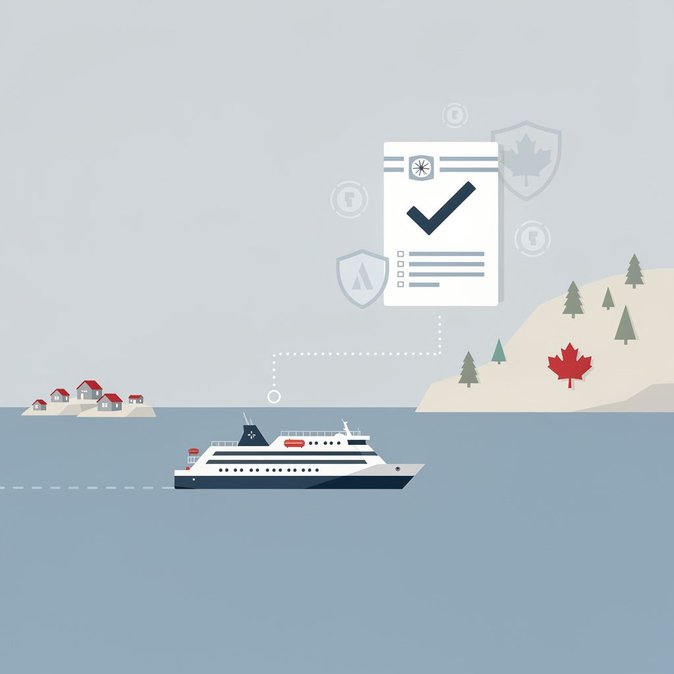
Effective immediately, most visa-exempt foreign nationals travelling by boat from the French territory of Saint-Pierre-et-Miquelon (SPM) to Fortune, Newfoundland and Labrador must obtain an electronic travel authorisation (eTA) before departure. Immigration, Refugees and Citizenship Canada quietly announced the rule on June 4, but yesterday (June 15) issued detailed guidance amid media scrutiny of asylum shopping via the short sea route. Officials say a “small but rising” number of foreign travellers—who would normally need an eTA for an air journey—were flying into SPM and then boarding the 90-minute ferry to sidestep airline document checks. By closing the loophole, Ottawa adds a pre-screening layer designed to filter out inadmissible passengers before they reach Canadian soil. The requirement does not apply to French citizens resident in SPM, to cruise-ship visitors, or to U.S. citizens and permanent residents. Approximately 6,000 visa-exempt travellers use the route annually, mostly for short tourism or fishery work transfers, and CBSA says it expects minimal impact on legitimate traffic. For mobility teams, the change complicates last-mile routing options during peak vacation season. Companies that occasionally route expatriates through SPM to reach Atlantic Canada—common when cargo space via St. John’s is tight—must now budget extra lead time for the CA$7 online authorisation. Carriers operating charter vessels will also be required to verify eTAs at embarkation or risk administrative penalties. Although the measure targets one regional link, policy analysts suggest it signals Ottawa’s willingness to extend eTA checks to additional marine and land modes if irregular claim volumes rise elsewhere. Mobility professionals should monitor internal travel-risk dashboards for ferry, rail and small-airport points of entry that could face similar rules.
Source: Envoy Global