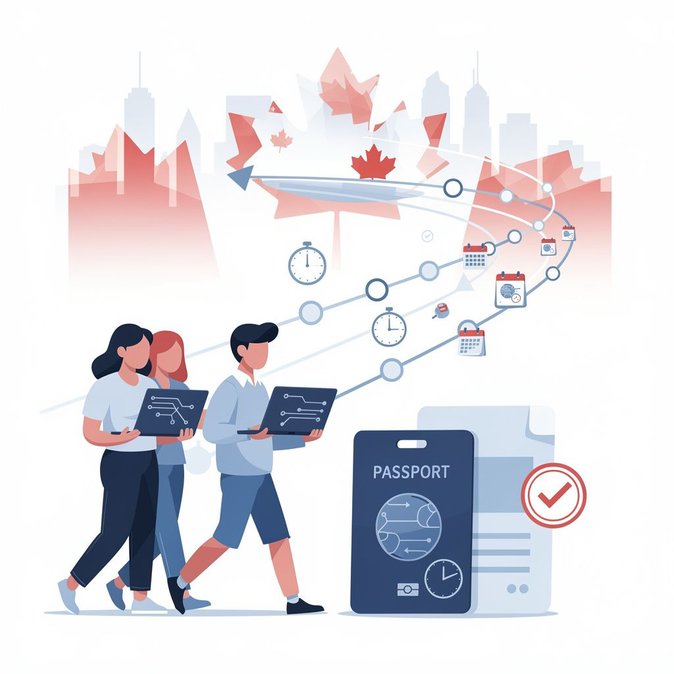
As part of Canada’s new $2.3-billion national AI strategy unveiled earlier this month, the federal government confirmed on 16 June that it will create an accelerated processing lane for employers hiring foreign artificial-intelligence talent. According to officials quoted by The Epoch Times, Labour Market Impact Assessments (LMIAs) for AI roles submitted through the Global Talent Stream (GTS) will be issued within 10 days, and the subsequent work-permit decision will target another 10-day turnaround—cutting total time from the current 2–6 months to just three weeks. The GTS already provides two-week service for many tech occupations, but industry groups have pushed for an even faster pathway as global demand for machine-learning engineers and data scientists intensifies. Under the pilot, qualifying positions will be defined by National Occupational Classification codes in AI research, deep-learning engineering and related fields, and employers must submit an enhanced Labour-Market Benefits Plan showing how the hire will transfer skills to Canadians. The fast-track aligns with the International Talent Attraction Strategy, which allows top-tier specialists to transition from temporary status to permanent residence more easily. Immigration lawyers expect the program to be especially popular with U.S. H-1B holders affected by tightening rules south of the border, as well as graduates of Toronto and Montréal AI hubs who lose post-graduation work eligibility. For corporate mobility managers, the announcement offers a concrete timeline to pitch when recruiting overseas candidates: 20 calendar days from LMIA filing to work authorisation, plus travel time. Employers should, however, prepare for stricter compliance audits; Employment and Social Development Canada says it will increase post-approval site visits to verify salary commitments and knowledge-transfer activities. The government has not released a launch date, but sources indicate the new service standard could be in place by September, in time for the fall hiring cycle. HR teams are advised to start drafting airtight benefit plans and gather supporting wage-benchmark data now so that applications can be filed the day the window opens.