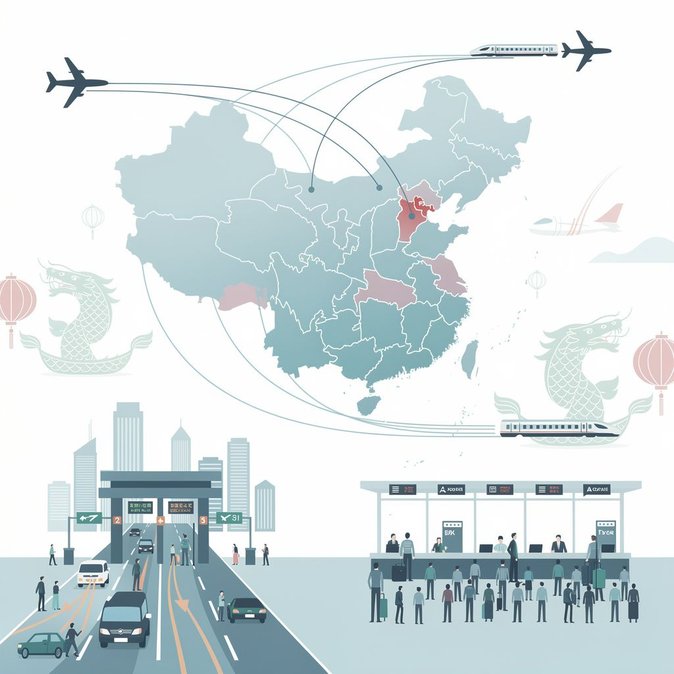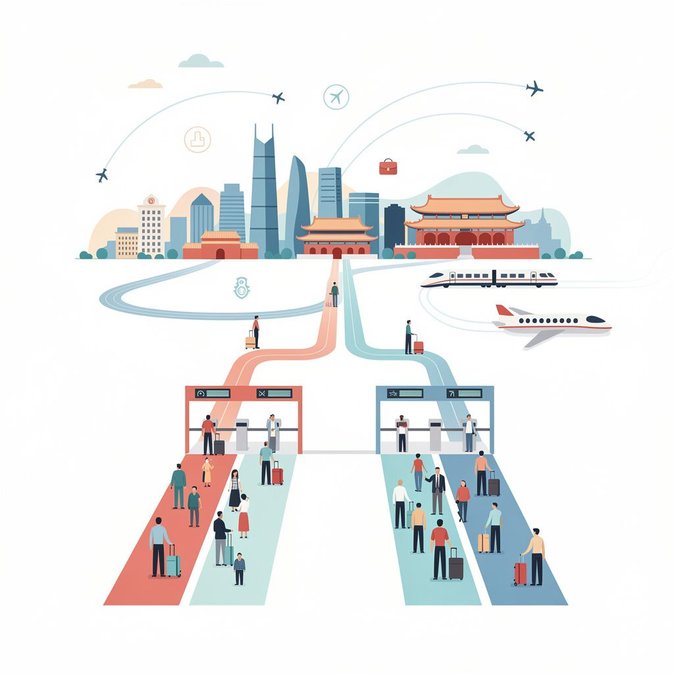
Beijing’s airports and land crossings have already processed more than 10 million inbound and outbound trips in 2026, the city’s Exit-Entry Frontier Inspection Station announced on 15 June. The milestone—reached half a month earlier than in 2025—marks a 10.5 percent year-on-year rise and underscores the capital’s accelerating recovery as an international hub.
For travelers and corporate mobility planners navigating China’s evolving entry rules, VisaHQ can simplify the process. The company’s online platform (https://www.visahq.com/china/) provides real-time guidance on visa-free eligibility, traditional visa applications, and document preparation, helping visitors avoid surprises at the border and move through Beijing’s fast lanes with confidence.
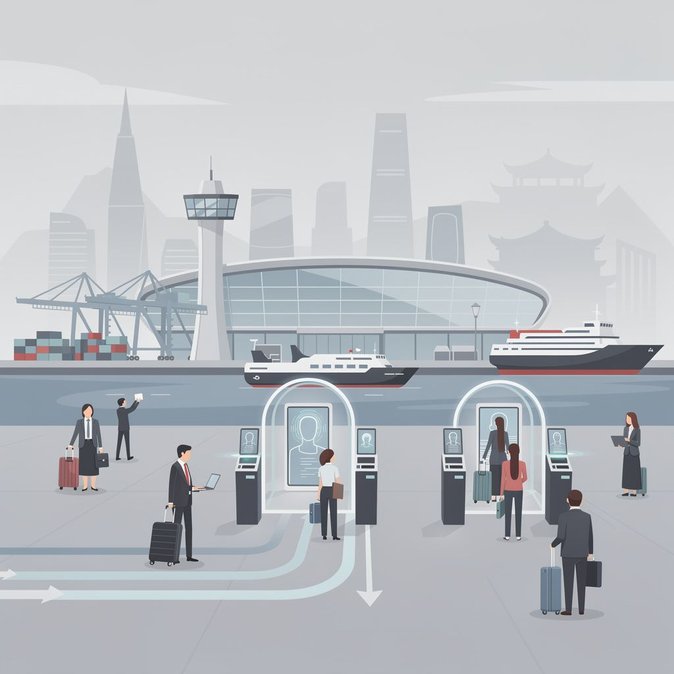
Foreign nationals accounted for 3.4 million of the movements, up 30 percent from the same period last year. More than 1.25 million of those visitors entered on visa-exemption or temporary-entry-permit schemes, reflecting China’s expanding unilateral and transit visa-free policies. The most common purposes of travel were sightseeing, business exchange and family reunion, officials said. Chinese mainland residents made roughly six million trips through Beijing, with South Korea, Thailand and Singapore emerging as the top outbound destinations. Industry observers attribute the shift to an improved spread of direct regional flights from Beijing Daxing International Airport and aggressive fare promotions by Chinese carriers eager to rebuild market share. To manage growth, Beijing’s border-inspection authority has increased e-channel capacity by 20 percent, trialled facial-recognition fast lanes for enrolled frequent travellers and launched a WeChat mini-program offering real-time queue-length data. For corporate mobility managers, those upgrades translate into shorter wait times—e-channel processing now averages 18 seconds—making Beijing more attractive for Asia-Pacific headquarters relocations. Looking ahead, officials hinted that additional visa-on-arrival counters could be piloted at Daxing later this year. Combined with the national 240-hour visa-free transit scheme, the move would position the capital as a convenient "arrival first, paperwork later" gateway—a model already used by hubs such as Singapore and Doha.
For travelers and corporate mobility planners navigating China’s evolving entry rules, VisaHQ can simplify the process. The company’s online platform (https://www.visahq.com/china/) provides real-time guidance on visa-free eligibility, traditional visa applications, and document preparation, helping visitors avoid surprises at the border and move through Beijing’s fast lanes with confidence.
Foreign nationals accounted for 3.4 million of the movements, up 30 percent from the same period last year. More than 1.25 million of those visitors entered on visa-exemption or temporary-entry-permit schemes, reflecting China’s expanding unilateral and transit visa-free policies. The most common purposes of travel were sightseeing, business exchange and family reunion, officials said. Chinese mainland residents made roughly six million trips through Beijing, with South Korea, Thailand and Singapore emerging as the top outbound destinations. Industry observers attribute the shift to an improved spread of direct regional flights from Beijing Daxing International Airport and aggressive fare promotions by Chinese carriers eager to rebuild market share. To manage growth, Beijing’s border-inspection authority has increased e-channel capacity by 20 percent, trialled facial-recognition fast lanes for enrolled frequent travellers and launched a WeChat mini-program offering real-time queue-length data. For corporate mobility managers, those upgrades translate into shorter wait times—e-channel processing now averages 18 seconds—making Beijing more attractive for Asia-Pacific headquarters relocations. Looking ahead, officials hinted that additional visa-on-arrival counters could be piloted at Daxing later this year. Combined with the national 240-hour visa-free transit scheme, the move would position the capital as a convenient "arrival first, paperwork later" gateway—a model already used by hubs such as Singapore and Doha.