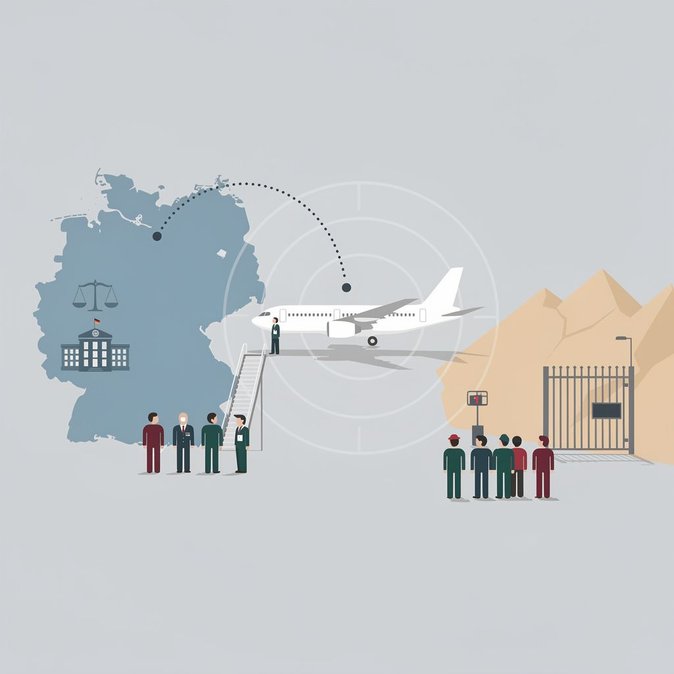
In the early hours of 16 June 2026 a charter aircraft took off from Leipzig/Halle airport bound for Kabul, carrying around 30 Afghan nationals whose asylum claims had been rejected and who had been convicted of serious offences – including rape and manslaughter – in German courts. The removal flight is the second large-scale deportation to Afghanistan since Berlin reached a direct repatriation arrangement with the Taliban-led de-facto government earlier this year, eliminating the need for the Qatar-mediated transfers that had been used since 2024. Under the new understanding Germany can schedule charter flights without routing paperwork through a third country, provided Kabul issues landing clearance and accepts German security escorts on the ground. Federal and state interior ministries see the mechanism as a way to enforce court-ordered removals in cases that have a high public-safety profile – an area that has drawn strong criticism from opposition parties since the Taliban takeover in 2021 suspended routine returns. The policy remains controversial. Human-rights organisations argue that Afghanistan is still unsafe for returnees and note that three earlier charter operations had to be cancelled at short notice in May when Kabul signalled displeasure at what it described as Berlin’s “insufficient diplomatic engagement.” Protesters again gathered inside Leipzig airport on Monday night, staging a silent vigil while police blocked public viewing areas. For employers, mobility managers and relocation providers the development is noteworthy for two reasons. First, it illustrates that bilateral, case-by-case deportation deals can be revived even with regimes that lack international recognition, signalling a stricter German stance on enforcing removal orders. Second, Afghan nationals with criminal convictions may now face accelerated removal, which could shorten the window for last-minute appeals or humanitarian petitions. Companies sponsoring Afghan staff should therefore check immigration status carefully and ensure any residence-permit extensions are filed early. Looking ahead, the Interior Ministry has indicated that monthly flights are being planned if operational conditions allow. The move could encourage other EU member states to pursue similar bilateral channels – potentially fragmenting common EU return policy just days after the new Common European Asylum System came into force.
Source: ntv/dpa