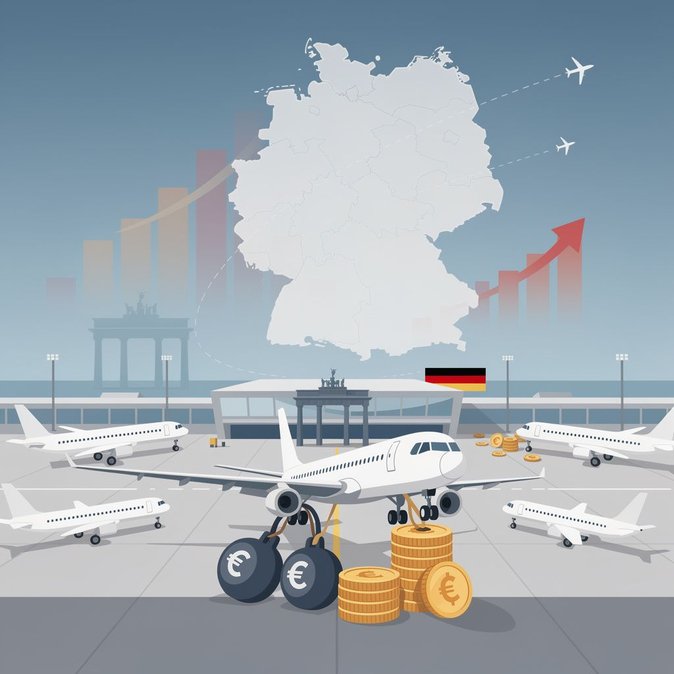
At the Berlin Air Show on 15 June 2026 Chancellor Friedrich Merz unveiled Germany’s first national aviation strategy in a decade, promising to make the country “Europe’s leading air-transport hub.” Within hours the Board of Airline Representatives in Germany (BARIG), which speaks for more than 100 domestic and foreign carriers, welcomed the vision but lambasted the cost base that, in its view, undermines the very goal the strategy sets. BARIG chairman Michael Hoppe noted that German airports levy some of the highest passenger charges and security fees on the continent. Combined with a 2024 hike in the air-passenger tax, total location costs have, according to BARIG, driven low-cost carriers to shift capacity to neighbouring countries and forced network airlines to thin out frequencies on marginal routes.
For international travellers and corporate teams contending with these route changes, VisaHQ can streamline at least one piece of the puzzle: obtaining the right travel documents. Through its dedicated Germany portal (https://www.visahq.com/germany/) the service provides real-time visa requirements, electronic applications and courier support, ensuring that staff can rebook via alternative hubs without worrying about entry formalities.
The government plans to roll back part of the tax on 1 July 2026, but the association calls that “cosmetic.” Beyond taxes, the group urged Berlin to digitise aviation-security screening, harmonise slot-coordination fees and subsidise sustainable-aviation-fuel infrastructure so that carriers are not saddled with first-mover costs. Failure to act, BARIG warned, will reduce Germany’s intercontinental feed, hurting export-oriented industries that rely on same-day connections to Asia and North America. For corporate travel managers the dispute is more than industry lobbying: higher airport charges translate directly into ticket prices and may make secondary airports less viable for regional‐sales teams. Mobility budgets for 2026 should therefore retain a fuel-surcharge contingency and allow for itineraries via hubs outside Germany until clarity emerges. The Transport Ministry said it will convene a stakeholder task-force before the summer break. No immediate tariff cuts are expected, but officials hinted at a possible cap on annual fee increases tied to inflation – a small step toward the customer-friendly cost base airlines are demanding.
For international travellers and corporate teams contending with these route changes, VisaHQ can streamline at least one piece of the puzzle: obtaining the right travel documents. Through its dedicated Germany portal (https://www.visahq.com/germany/) the service provides real-time visa requirements, electronic applications and courier support, ensuring that staff can rebook via alternative hubs without worrying about entry formalities.
The government plans to roll back part of the tax on 1 July 2026, but the association calls that “cosmetic.” Beyond taxes, the group urged Berlin to digitise aviation-security screening, harmonise slot-coordination fees and subsidise sustainable-aviation-fuel infrastructure so that carriers are not saddled with first-mover costs. Failure to act, BARIG warned, will reduce Germany’s intercontinental feed, hurting export-oriented industries that rely on same-day connections to Asia and North America. For corporate travel managers the dispute is more than industry lobbying: higher airport charges translate directly into ticket prices and may make secondary airports less viable for regional‐sales teams. Mobility budgets for 2026 should therefore retain a fuel-surcharge contingency and allow for itineraries via hubs outside Germany until clarity emerges. The Transport Ministry said it will convene a stakeholder task-force before the summer break. No immediate tariff cuts are expected, but officials hinted at a possible cap on annual fee increases tied to inflation – a small step toward the customer-friendly cost base airlines are demanding.