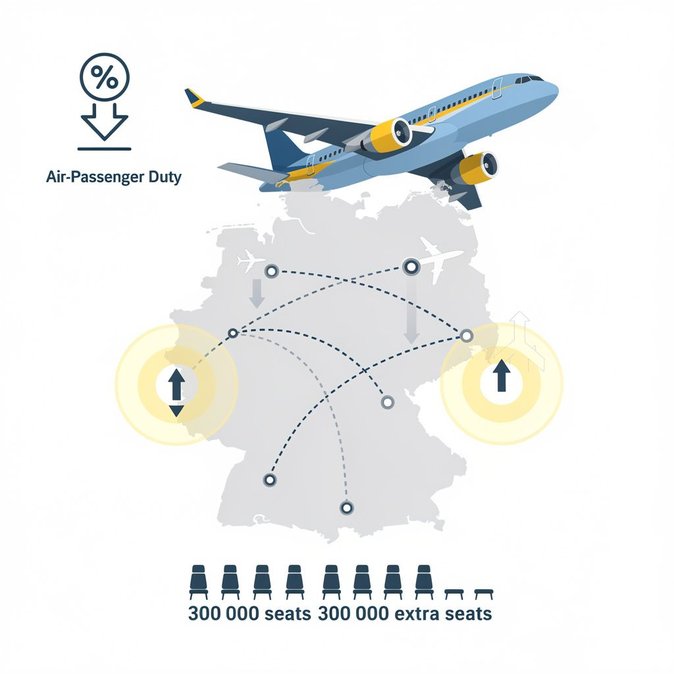
Low-cost carrier Ryanair unveiled an enlarged summer 2026 schedule on 16 June, adding 300,000 seats, two new German bases (Saarbrücken and Friedrichshafen) and a string of leisure routes from cost-efficient regional airports such as Weeze, Memmingen and Bremen. The airline attributes the expansion directly to the government’s decision to roll back the 2023 hike in Germany’s air-passenger duty from 1 July 2026. By shifting capacity away from higher-fee hubs Hamburg and Berlin – both slated for further cuts – Ryanair is signalling that price-sensitive traffic will follow the lowest total airport charges, not merely tax levels. Local tourism boards in Saarland and the Lake-Constance region hailed the announcement, predicting that Mediterranean connections to Palma de Mallorca, Alicante and Faro will attract both outbound holidaymakers and inbound visitors to Germany’s south-west. For corporate mobility planners the news matters on two fronts. First, project teams in automotive and engineering clusters around Friedrichshafen gain additional point-to-point options that could reduce travel times compared with transfers through Frankfurt or Zurich. Second, the strategy underscores how fiscal policy can quickly alter route economics: any reversal of the tax cut could see capacity withdrawn just as fast. Travel managers should note that Ryanair’s lowest fares will primarily be available from secondary airports; employees departing from Hamburg or Berlin may face reduced frequency and higher prices. Companies may want to revisit travel-policy guidelines on acceptable departure points and ground-transport reimbursements. Looking ahead, German airport operators hope the carrier’s move will pressure larger network airlines to restore frequencies they cut during the 2025 fuel-cost spike. Whether that materialises will depend on how long the lower tax rates stay in place and whether regional airports can scale security and ground-handling staff in time for the July peak.
Source: Reise.de