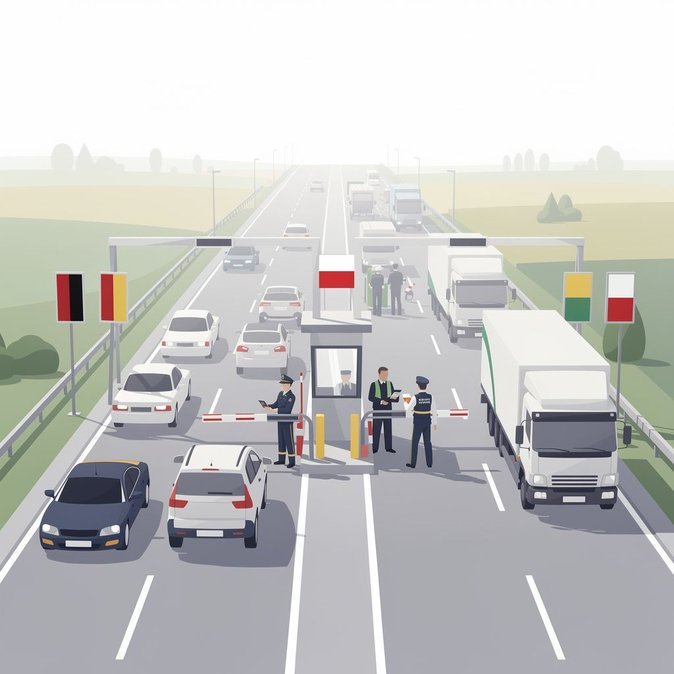
In a status update released on 15 June, Poland’s Border Guard revealed that nearly 24,000 people and over 11,000 vehicles were screened at the country’s internal Schengen borders with Germany and Lithuania between 12 and 14 June. The data come as Warsaw prolongs temporary border controls until 1 October 2026 in response to what officials label “persistent security threats.” On the German frontier, almost 11,000 travellers were inspected and five denied entry, while on the Lithuanian side more than 13,000 were checked, leading to four refusals and 45 readmissions. No illegal entries were recorded on the heavily fortified Belarus line during the same period. For business travelers accustomed to seamless Schengen travel, the spot checks translate into occasional queues and mandatory ID presentations—even on commercial bus routes and rail services. Companies running cross-border commuter programs between Polish and German plants should build in buffer time and remind staff to carry valid passports or national ID cards. The controls are authorised under Article 25 of the Schengen Borders Code, which allows member states to reactivate checks for up to six months. Poland first reintroduced them in April amid concerns about smuggling networks exploiting the Belarus corridor and the Euro 2024 football tournament in neighbouring Germany. Border officials say that, despite the high volume of inspections, average delays remain below 20 minutes. Nevertheless, mobility teams are urged to monitor peak weekend periods, when leisure traffic can exacerbate hold-ups.
Source: Tysol.pl