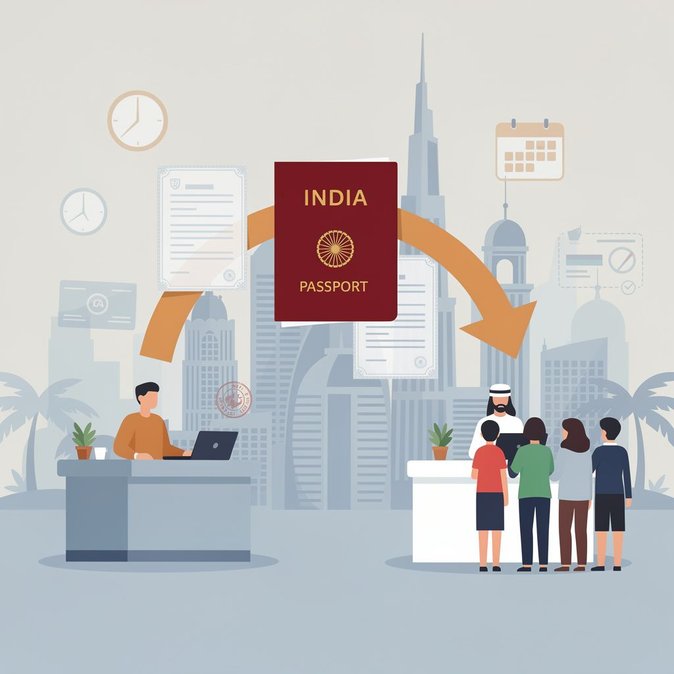
Indian nationals—the UAE’s largest expatriate community—will soon lodge passport renewals, visa applications and Overseas Citizen of India (OCI) requests with a new private-sector provider. The Embassy of India in Abu Dhabi announced on 16 June that Kerala-based Al Hind Tours & Travels has won a three-year contract to replace BLS International and SGIVS Global across 16 service centres in Abu Dhabi, Dubai and Sharjah from 1 July 2026. Until then, the incumbent firms will continue processing files, and applicants with in-progress cases need take no action.
For individuals and corporate PROs seeking alternative support during this interregnum, VisaHQ can step in to handle UAE visa applications, passport renewals and related documentation. Through its digital portal (https://www.visahq.com/united-arab-emirates/), the company offers clear checklists, real-time tracking and courier options, ensuring travellers stay on schedule even if walk-in centres become crowded.
The mission promised detailed guidance on new centre locations, operating hours and service fees over the coming weeks and urged customers to monitor official channels to avoid fraud. The switch matters to UAE employers because Indian assignees account for roughly one-third of the country’s skilled-worker population; bulk renewals of passports and OCI cards often run through company PROs (public-relations officers). Mobility managers should update vendor lists, reissue internal SOPs and budget for any fee changes. Companies planning summer rota-tions should also note potential short-term congestion in late June as applicants rush to beat the cut-over. Al Hind, best known for Hajj and Umrah pilgrim charters, says it will introduce mobile biometric vans and extended weekend hours to reduce queues—an innovation that could set a new service benchmark in the UAE’s competitive consular-outsourcing market. The embassy, for its part, has tied the contract to strict performance metrics on customer-satisfaction scores and processing times, reflecting New Delhi’s wider push to digitise consular services for its 13-million-strong overseas diaspora. For global companies, the episode is a reminder that outsourcing contracts can shift with little lead-time, disrupting well-worn administrative routines. HR departments should keep employees informed, especially those on short business trips who might need emergency travel documents during the transition.
For individuals and corporate PROs seeking alternative support during this interregnum, VisaHQ can step in to handle UAE visa applications, passport renewals and related documentation. Through its digital portal (https://www.visahq.com/united-arab-emirates/), the company offers clear checklists, real-time tracking and courier options, ensuring travellers stay on schedule even if walk-in centres become crowded.
The mission promised detailed guidance on new centre locations, operating hours and service fees over the coming weeks and urged customers to monitor official channels to avoid fraud. The switch matters to UAE employers because Indian assignees account for roughly one-third of the country’s skilled-worker population; bulk renewals of passports and OCI cards often run through company PROs (public-relations officers). Mobility managers should update vendor lists, reissue internal SOPs and budget for any fee changes. Companies planning summer rota-tions should also note potential short-term congestion in late June as applicants rush to beat the cut-over. Al Hind, best known for Hajj and Umrah pilgrim charters, says it will introduce mobile biometric vans and extended weekend hours to reduce queues—an innovation that could set a new service benchmark in the UAE’s competitive consular-outsourcing market. The embassy, for its part, has tied the contract to strict performance metrics on customer-satisfaction scores and processing times, reflecting New Delhi’s wider push to digitise consular services for its 13-million-strong overseas diaspora. For global companies, the episode is a reminder that outsourcing contracts can shift with little lead-time, disrupting well-worn administrative routines. HR departments should keep employees informed, especially those on short business trips who might need emergency travel documents during the transition.