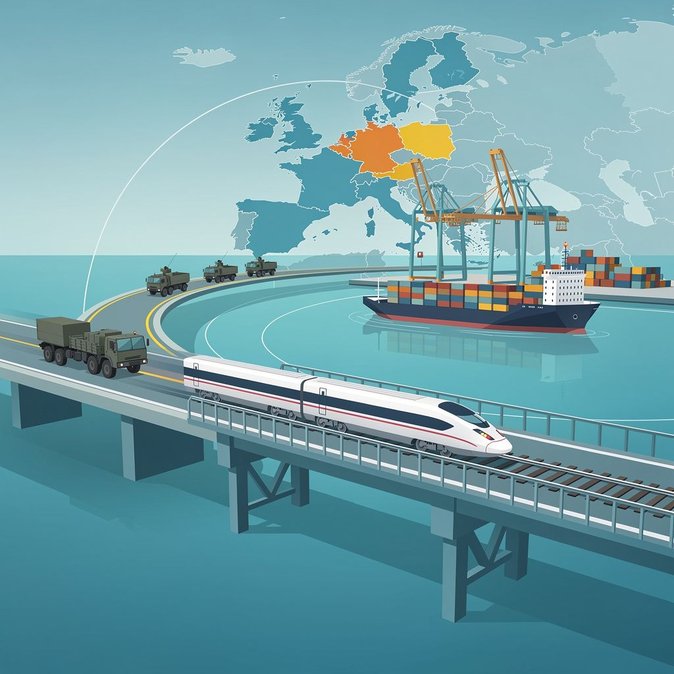
On 19 June the European Commission launched the final Connecting Europe Facility (CEF) call of the current budget cycle, making €1.1 billion available for projects that remove ‘bottlenecks’ on the trans-European transport network (TEN-T). Priority areas include high-speed rail corridors that cross Belgium, electrification of road-haulage nodes at Brussels Airport and Zeebrugge Port, and upgrades that allow heavy military vehicles to use civilian infrastructure.
For businesses and travellers who expect to take advantage of these enhanced links, VisaHQ’s Belgium portal (https://www.visahq.com/belgium/) offers a quick way to secure any necessary visas and travel documents, helping companies move staff seamlessly across new TEN-T corridors without administrative delays.
Belgian transport minister Georges Gilkinet welcomed the call, noting that Brussels-Amsterdam trains still crawl at 160 km/h on some sections because of outdated signalling. The federal infrastructure agency Infrabel confirmed it will submit proposals to co-finance ETCS Level 2 rollout on the Brussels-Antwerp-Rotterdam axis and reinforce key bridges on the E40 motorway for dual civilian-military use. From a corporate-mobility perspective the CEF grants can shorten journey times for cross-border commuters and reduce freight delays for multinational supply chains. If approved, the electrification funds could also expand airside e-bus fleets at Brussels Airport, improving sustainability metrics for corporate travel programmes. Applications are due by 6 October 2026, with grant agreements expected in the first quarter of 2027. Global companies with large Belgian operations should monitor consortia opportunities: up to 85 % of pilot-project costs can be covered, and private entities are eligible provided they partner with a public infrastructure manager.
For businesses and travellers who expect to take advantage of these enhanced links, VisaHQ’s Belgium portal (https://www.visahq.com/belgium/) offers a quick way to secure any necessary visas and travel documents, helping companies move staff seamlessly across new TEN-T corridors without administrative delays.
Belgian transport minister Georges Gilkinet welcomed the call, noting that Brussels-Amsterdam trains still crawl at 160 km/h on some sections because of outdated signalling. The federal infrastructure agency Infrabel confirmed it will submit proposals to co-finance ETCS Level 2 rollout on the Brussels-Antwerp-Rotterdam axis and reinforce key bridges on the E40 motorway for dual civilian-military use. From a corporate-mobility perspective the CEF grants can shorten journey times for cross-border commuters and reduce freight delays for multinational supply chains. If approved, the electrification funds could also expand airside e-bus fleets at Brussels Airport, improving sustainability metrics for corporate travel programmes. Applications are due by 6 October 2026, with grant agreements expected in the first quarter of 2027. Global companies with large Belgian operations should monitor consortia opportunities: up to 85 % of pilot-project costs can be covered, and private entities are eligible provided they partner with a public infrastructure manager.