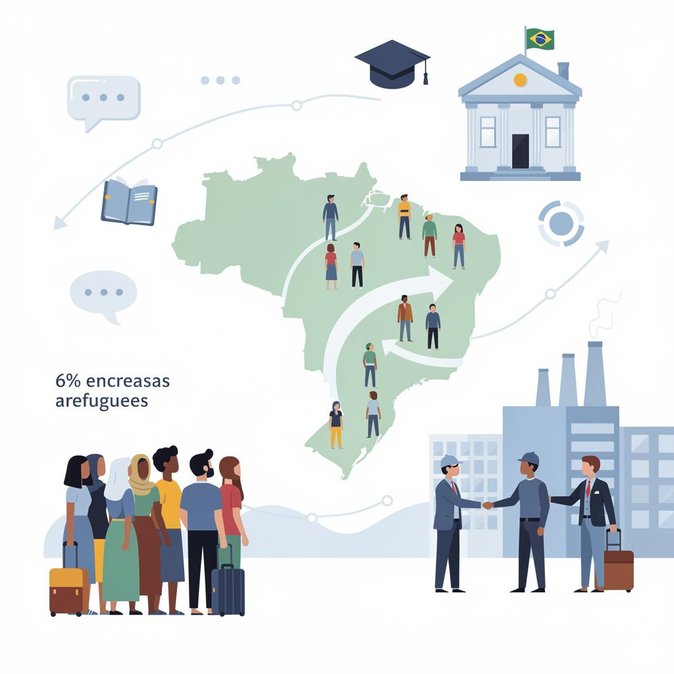
At a ceremony in Brasília on 22 June—coinciding with the 75th anniversary of the UN Refugee Convention—the Ministry of Justice and Public Security announced a raft of measures aimed at cementing Brazil’s reputation as Latin America’s most progressive asylum regime. Flanked by UNHCR officials and civil-society leaders, Justice Minister Wéllington César confirmed that 9,162 people had their refugee status recognised in 2025, bringing the resident refugee population to 165,774. New guidelines will prioritise family-reunification visas, faster CPF issuance and expanded Portuguese-language courses funded via municipal “solidarity pacts.” A key deliverable is the relaunch of the Forum of Migrant and Refugee Leaders (FOMIGRA) as a permanent consultative body empowered to co-design integration programmes with federal agencies. The government also floated the idea of a National Immigration Fund—financed by a surcharge on international airfare—to bankroll housing vouchers and micro-credit for newcomers. Yet the event highlighted persistent gaps. An accompanying study showed that 83 % of Brazil’s 5,570 municipalities still lack anti-xenophobia initiatives and only 14 % provide multilingual public services. Business associations urged the administration to include labour-mobility components, such as mutual recognition of professional qualifications, in the forthcoming National Migration Plan. For global-mobility managers the takeaway is two-fold: (1) refugee employees may gain quicker access to social services and formal employment, easing HR onboarding; and (2) companies operating outside major hubs should audit local support ecosystems, as municipal capacity remains highly uneven despite federal progress.
Source: Brasil 247