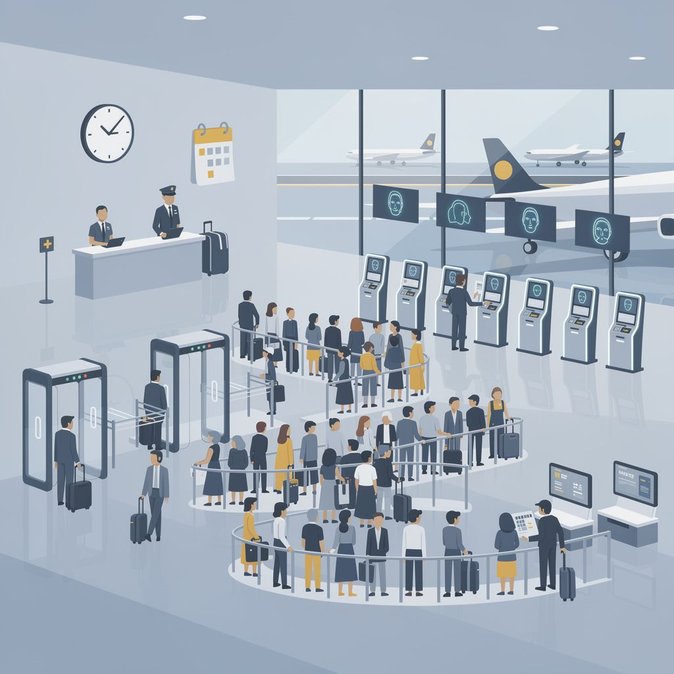
Brussels Airport Company announced on 23 June 2026 that it expects to handle 5.2 million passengers during the July–August peak – an all-time high and 4 % more than last summer. The forecast comes despite lingering staffing shortages at the Federal Police’s border-control unit and the ongoing phased roll-out of the EU’s new Entry/Exit System (EES), which has already caused hour-long queues for non-EU nationals. To avert “absolute chaos,” the airport is deploying additional temporary check-in desks, expanding self-service bag-drop units and hiring 300 seasonal staff. Airport CEO Arnaud Feist said extra federal police officers will be seconded to passport control, while new pre-registration kiosks will collect biometric data in advance of the October EES deadline. Automated e-gates, currently limited to EU citizens, will be trialled for selected nationalities to reduce manual checks. The airport has also upgraded its app and AI chatbot “BRUce” to push real-time queue-length alerts so travellers can adjust arrival times. For businesses, the record volumes mean longer dwell times and potential knock-on delays for connecting flights. Mobility managers are advising executives to arrive at least three hours before long-haul departures and to schedule critical meetings a day after intercontinental arrivals to cushion against disruption. Companies relocating talent through Brussels should plan for lengthier post-arrival formalities because EES requires fingerprint and facial scans for every crossing. The passenger surge is being driven by strong leisure demand to Spain, Turkey, Greece and Morocco, plus new long-haul routes to São Paulo, Kilimanjaro and Halifax. Cargo volumes remain flat, but belly-hold capacity is expected to rise 6 % as airlines up-gauge aircraft. Despite geopolitical uncertainties – notably overflight restrictions linked to the Russia-Ukraine conflict – airport management says fuel supplies and flight schedules are secure. Looking forward, Brussels Airport will use the summer as a stress-test for full EES implementation across Schengen. Successful trials of mixed-nationality e-gates could pave the way for a permanent fast-track lane for trusted business travellers, a measure Belgian industry groups have long requested to safeguard the country’s attractiveness as an HQ location.
Source: Aviation24.be