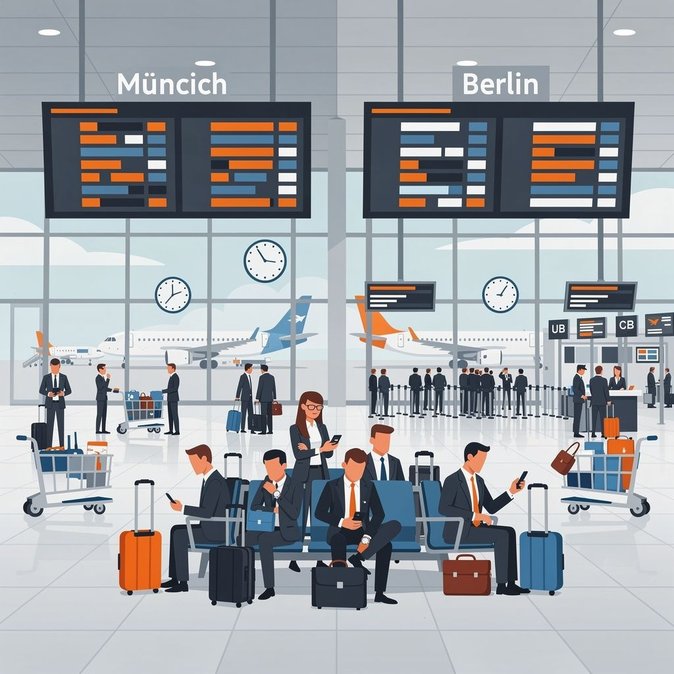
Germany’s reputation for smooth connectivity took a hit on 23 June 2026 when a cascade of operational failures produced 427 flight delays and nine cancellations at Munich (MUC) and Berlin-Brandenburg (BER). Real-time FlightAware data show up to 65,000 passengers—many on tight intra-EU connections—caught in snaking queues that stretched outside terminal doors. Ground-handling contractors blamed acute staffing gaps and an unexpected surge in summer traffic. At Munich, Lufthansa admitted turnaround times had slipped by 28 minutes on average, forcing the flag-carrier to scrub five long-haul departures and re-route feeder traffic through Frankfurt. Berlin-Brandenburg reported 160 delayed rotations, knocking easyJet, Eurowings and Ryanair schedules off balance across Europe. Under EC 261, airlines must provide meals, hotel rooms and compensation of €250-€600 depending on distance and delay length, but many travellers complained that hotel capacity in the Bavarian capital was already exhausted by an overlapping medical-tech congress. For mobility managers the lesson is twofold: build contingency time into itineraries that rely on same-day onward trains or onward flights, and brief employees on their EC 261 rights—including the right to re-routing via rail when flights are cancelled. Companies with assignees travelling in July should consider flexible tickets on ICE high-speed trains as a hedge against aviation disruption. German airport operators have promised to accelerate hiring and open additional security lanes before the peak late-July exodus, yet unions warn that without structural pay rises staffing will remain fragile. The German Travel Management Association (VDR) has written to the Federal Ministry of Transport requesting an urgent industry round-table to protect peak-season business mobility.
Source: Nomad Lawyer