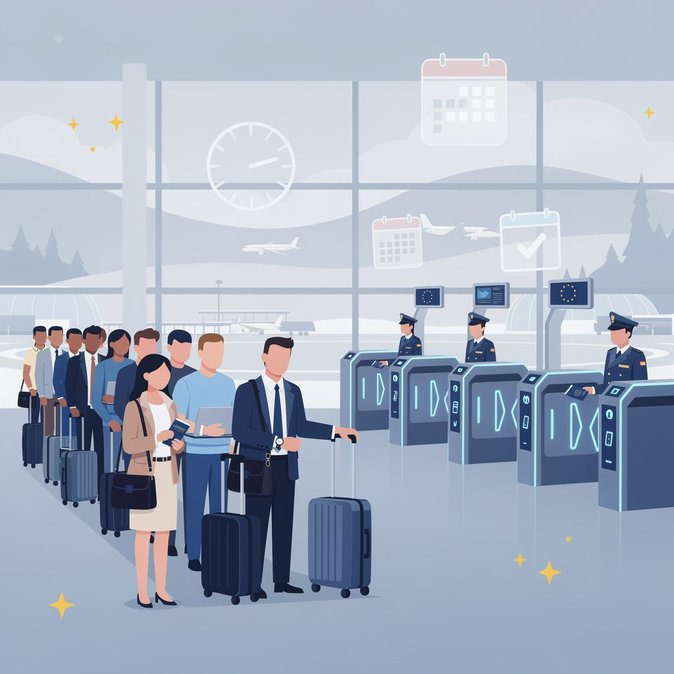
The EU’s border-agency Frontex delivered an unwelcome reality check on 23 June 2026, warning that long queues caused by the new Entry/Exit System (EES) may last “one to two years.” Speaking to industry media, deputy executive director Uku Särekanno said first-time biometric enrolment remains the bottleneck, even after airports added extra kiosks. At Helsinki Airport, Finavia has already seen wait times spike to 60–90 minutes at peak departures for non-EU travellers since EES became fully operational on 10 April 2026. The Finnish Border Guard confirms it will lose the legal option to temporarily waive fingerprint collection in early September, when the regulation’s 90-day flexibility window expires.
At this stage, travelers and corporate travel planners might find it helpful to lean on a specialist visa and documentation concierge. VisaHQ, for example, maintains an up-to-date Finnish entry advisory (https://www.visahq.com/finland/) and can walk passengers through EES requirements, biometric pre-registration options and any visa formalities in one streamlined dashboard, reducing last-minute surprises at the border.
From that point, every first-time visitor must give four fingerprints and a facial image before crossing. Finavia and the Ministry of the Interior have drafted a contingency plan that includes redirecting overflow traffic to Tampere-Pirkkala and Turku airports, deploying mobile enrolment stations, and encouraging travellers to pre-register biometrics via the EU “Travel to Europe” smartphone app. Airlines operating the Helsinki hub—particularly Finnair, Qatar Airways and Japan Airlines—have been asked to stagger arrival banks to avoid midnight surges. Corporate travel managers are urged to brief overseas staff and clients: for the next 12–24 months, adding at least an extra hour to Schengen passport control at Finnish airports is prudent. Companies that bring groups to Finland for training or installations should consider chartering early-morning slots when border-staffing levels are higher. The good news is that once travellers have completed initial enrolment, repeat crossings will be faster for up to three years. Looking ahead, Finnish authorities must balance security, EU compliance and the competitiveness of Helsinki’s hub-and-spoke model. The risk, industry analysts warn, is that persistent friction at the border could drive Asia-to-Europe transfer traffic to Istanbul or Dubai, undermining Finland’s “Twin-Hub” strategy just as new long-haul routes are launching.
At this stage, travelers and corporate travel planners might find it helpful to lean on a specialist visa and documentation concierge. VisaHQ, for example, maintains an up-to-date Finnish entry advisory (https://www.visahq.com/finland/) and can walk passengers through EES requirements, biometric pre-registration options and any visa formalities in one streamlined dashboard, reducing last-minute surprises at the border.
From that point, every first-time visitor must give four fingerprints and a facial image before crossing. Finavia and the Ministry of the Interior have drafted a contingency plan that includes redirecting overflow traffic to Tampere-Pirkkala and Turku airports, deploying mobile enrolment stations, and encouraging travellers to pre-register biometrics via the EU “Travel to Europe” smartphone app. Airlines operating the Helsinki hub—particularly Finnair, Qatar Airways and Japan Airlines—have been asked to stagger arrival banks to avoid midnight surges. Corporate travel managers are urged to brief overseas staff and clients: for the next 12–24 months, adding at least an extra hour to Schengen passport control at Finnish airports is prudent. Companies that bring groups to Finland for training or installations should consider chartering early-morning slots when border-staffing levels are higher. The good news is that once travellers have completed initial enrolment, repeat crossings will be faster for up to three years. Looking ahead, Finnish authorities must balance security, EU compliance and the competitiveness of Helsinki’s hub-and-spoke model. The risk, industry analysts warn, is that persistent friction at the border could drive Asia-to-Europe transfer traffic to Istanbul or Dubai, undermining Finland’s “Twin-Hub” strategy just as new long-haul routes are launching.