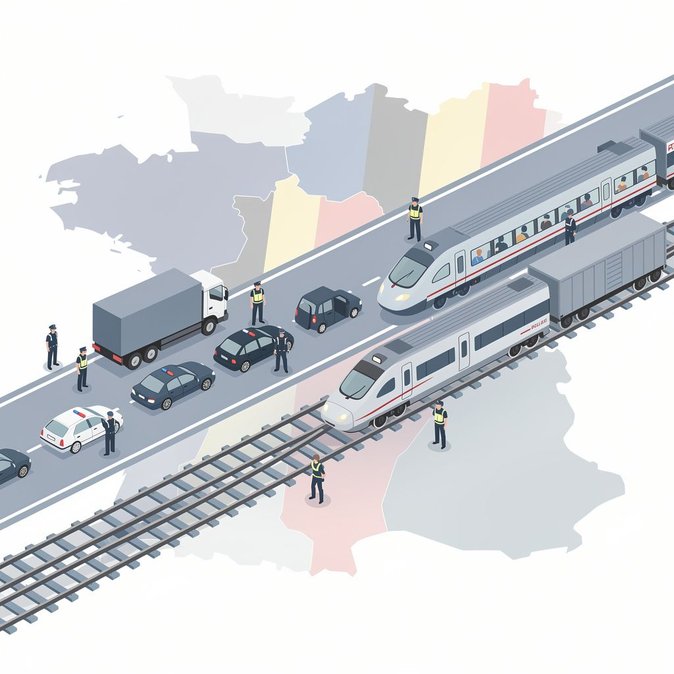
An intense heat dome pushing temperatures above 45 °C across central and western France has begun to strain the country’s transport network. Météo-France placed more than half of the country’s departments under red heat alert on 24 June, while regional prefects imposed speed restrictions on high-speed and conventional rail to prevent track deformation.
For travellers who still need to organise visas or other travel documents before heading to or transiting through France, VisaHQ can streamline the paperwork even as transport schedules fluctuate. Its user-friendly platform and real-time support help you secure the correct documentation without extra trips to a consulate; up-to-date requirements are available at https://www.visahq.com/france/
SNCF reports that roughly 12 % of TGV services and 18 % of TER regional trains were cancelled or delayed on Tuesday and Wednesday as operating speeds were cut from 320 km/h to 200 km/h in some corridors. Airports in Bordeaux, Nantes and Toulouse implemented “hot-runway” weight limits, forcing airlines to off-load passengers or cargo during the afternoon peak. Domestic carrier Transavia cancelled eight rotations citing performance margins, and the DGAC warned that further ground stops could be ordered if runway surface temperatures exceed 55 °C. Road travel is also affected: sections of the A62 and A20 motorways introduced 20 km/h speed reductions, while several départements restricted daytime HGV transit to reduce tyre-burst incidents. Freight forwarders are advising clients to expect 24- to 48-hour delays for time-definite road consignments south of the Loire. The extreme conditions are forecast to persist until at least 27 June. Companies with mobile workers should adjust duty-of-care protocols, provide bottled water allowances and remind staff of French labour-code provisions permitting outdoor work to cease if the Wet-Bulb Globe Temperature exceeds 28 °C. Travellers should build slack into itineraries and monitor airline and rail alerts.
For travellers who still need to organise visas or other travel documents before heading to or transiting through France, VisaHQ can streamline the paperwork even as transport schedules fluctuate. Its user-friendly platform and real-time support help you secure the correct documentation without extra trips to a consulate; up-to-date requirements are available at https://www.visahq.com/france/
SNCF reports that roughly 12 % of TGV services and 18 % of TER regional trains were cancelled or delayed on Tuesday and Wednesday as operating speeds were cut from 320 km/h to 200 km/h in some corridors. Airports in Bordeaux, Nantes and Toulouse implemented “hot-runway” weight limits, forcing airlines to off-load passengers or cargo during the afternoon peak. Domestic carrier Transavia cancelled eight rotations citing performance margins, and the DGAC warned that further ground stops could be ordered if runway surface temperatures exceed 55 °C. Road travel is also affected: sections of the A62 and A20 motorways introduced 20 km/h speed reductions, while several départements restricted daytime HGV transit to reduce tyre-burst incidents. Freight forwarders are advising clients to expect 24- to 48-hour delays for time-definite road consignments south of the Loire. The extreme conditions are forecast to persist until at least 27 June. Companies with mobile workers should adjust duty-of-care protocols, provide bottled water allowances and remind staff of French labour-code provisions permitting outdoor work to cease if the Wet-Bulb Globe Temperature exceeds 28 °C. Travellers should build slack into itineraries and monitor airline and rail alerts.