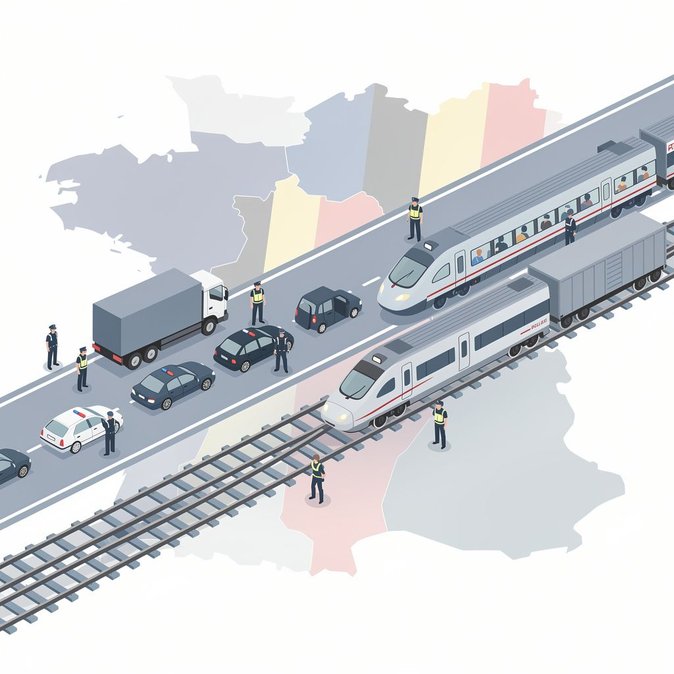
France endured its hottest day on record on Tuesday 23 June 2026, with the national thermal index hitting 29.6 °C at 15:00, prompting authorities to place 54 departments under red heat alert. Beyond public-health warnings, the extreme temperatures had immediate mobility implications: SNCF imposed 160 km/h speed limits on several high-speed rail sections to prevent rail buckling, and the Ministry for Ecological Transition authorised temporary relaxation of truck driving-hour limits at night to shift freight away from daytime congestion. In Île-de-France, RATP reduced peak-hour métro frequency to avoid overheating older rolling stock, while air-traffic controllers at Orly requested staggered departure slots to ease pressure on runway asphalt susceptible to softening above 45 °C.
For organisations that need to move staff in or out of France at short notice when heatwaves disrupt transport, VisaHQ can handle visa processing, document legalisations and embassy appointments swiftly, giving mobility managers one less variable to worry about. The service’s France portal (https://www.visahq.com/france/) offers live requirement updates and tracking tools that integrate smoothly with corporate travel policies.
Paris airports nonetheless maintained near-normal operations, though some regional runways in the southwest suspended operations for short periods during mid-afternoon. Employers activating business-continuity plans arranged remote work for field staff and advised postponing non-essential travel. Relocation firms postponed household-goods shipments involving long drives, and several global mobility teams invoked “extreme-weather clauses” in assignment policies, allowing employees to expense hotel overnights when rail returns were cancelled. Climate scientists warn that such episodes will increase in frequency. Companies with large assignee populations in France are therefore reviewing accommodation standards—such as mandatory air-conditioning—and updating evacuation and medical-assistance arrangements during red-alert periods.
For organisations that need to move staff in or out of France at short notice when heatwaves disrupt transport, VisaHQ can handle visa processing, document legalisations and embassy appointments swiftly, giving mobility managers one less variable to worry about. The service’s France portal (https://www.visahq.com/france/) offers live requirement updates and tracking tools that integrate smoothly with corporate travel policies.
Paris airports nonetheless maintained near-normal operations, though some regional runways in the southwest suspended operations for short periods during mid-afternoon. Employers activating business-continuity plans arranged remote work for field staff and advised postponing non-essential travel. Relocation firms postponed household-goods shipments involving long drives, and several global mobility teams invoked “extreme-weather clauses” in assignment policies, allowing employees to expense hotel overnights when rail returns were cancelled. Climate scientists warn that such episodes will increase in frequency. Companies with large assignee populations in France are therefore reviewing accommodation standards—such as mandatory air-conditioning—and updating evacuation and medical-assistance arrangements during red-alert periods.