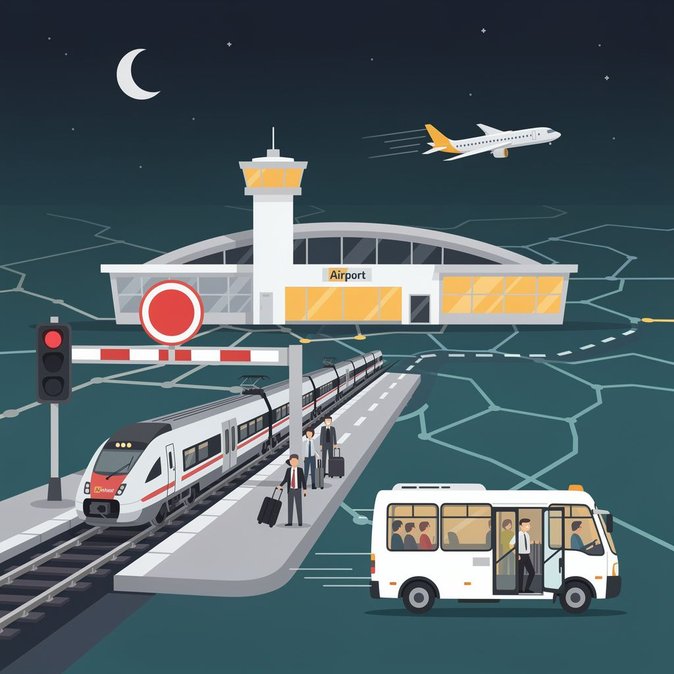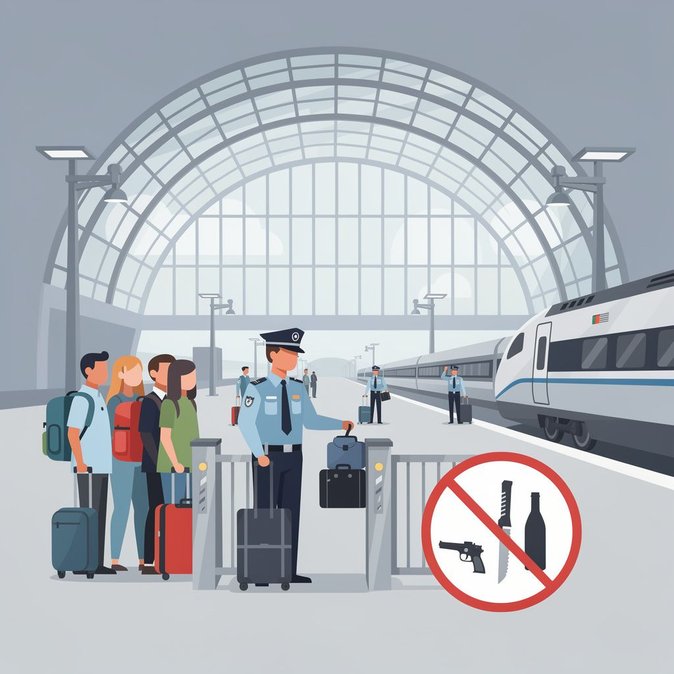
Business travellers passing through North-Rhine Westphalia this weekend will notice visibly tighter security. In a rare step, the German Federal Police (Bundespolizei) has issued a blanket “Allgemeinverfügung” that forbids passengers from carrying firearms, knives, striking tools or any object that could be used as a weapon in and around Düsseldorf Hauptbahnhof. The order also covers the main stations in Cologne, Dortmund, Essen, Bonn, Hamm, Krefeld, Mönchengladbach, Wuppertal and Münster, plus the busy S-8 and Köln–Bonn commuter corridors. It takes effect on Friday, 26 June at 15:00 and runs until 03:00 on Monday, 28 June. Police say the window targets peak leisure-travel hours that coincide with major concerts and sporting events in the state. The ban empowers officers to search luggage, confiscate prohibited objects and issue on-the-spot exclusion orders. Violators face removal from the station, €250 “Zwangsgeld” penalties and, where weapons-law breaches are proven, criminal prosecution. The Bundespolizei stresses that everyday tools such as screwdrivers or baseball bats also fall under the definition of dangerous items during the restricted period. Companies moving staff through NRW are therefore advised to inform travellers not to pack multitools or work equipment in hand luggage. Background data released with the order show that although violent incidents on rail premises fell slightly in 2025, the absolute number remains high. Since 2018 the force has issued 75 similar bans in NRW and seized over 2,400 dangerous objects – an argument the police use to justify the preventive measure. Large railway operators and Deutsche Bahn have welcomed the move, citing improved safety perception among commuters and international visitors. For mobility managers the key implication is scheduling: expect longer queues at station entrances as police conduct random bag checks. Those transporting exhibition materials, prototypes or bulky goods should consider courier options or reroute via less-affected hubs such as Frankfurt or Hanover. The ban does not extend to urban light-rail or underground areas, but connecting passengers may still be searched when moving between systems. In the longer term, security analysts see the order as part of a nationwide trend toward event-driven “pop-up” controls in public-transport nodes. Corporations hosting meetings in German cities should build a buffer for additional screening and communicate clearly about what staff may—and may not—carry during transit.
Source: Lokalbüro Düsseldorf