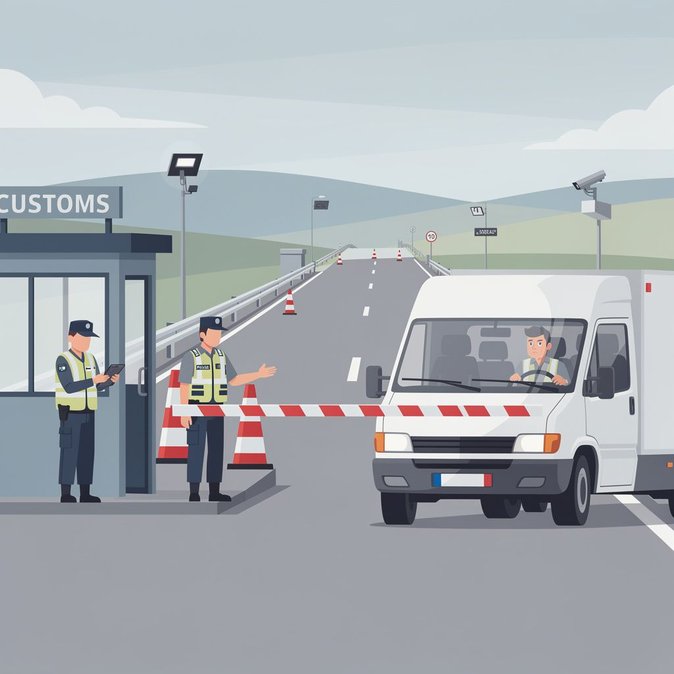
German authorities underline their tough stance on irregular migration with another arrest at the Czech frontier. On the morning of 25 June 2026, customs officers from the Regensburg main customs office stopped a Romanian-registered van with seven occupants near the Waidhaus crossing on the A6 motorway. A 39-year-old Moldovan passenger could not produce valid entry documents and was handed to the Federal Police. Questioning raised suspicion that the 24-year-old Romanian driver had accepted a cash payment to transport the Moldovan across the border. Federal Police have opened a criminal investigation for “Einschleusung von Ausländern” (facilitating illegal entry), a felony that carries up to five years’ imprisonment. The Moldovan national was issued an immediate entry ban and is to be placed in detention pending deportation. The incident comes amid Germany’s ongoing temporary controls at all land borders, in force since September 2024 to curb secondary migration flows. According to Interior Ministry figures, border officers have detected more than 80,000 unauthorised entries since the controls began. Business travellers using road corridors to Prague or Pilsen report intermittent waits of 30–45 minutes as officers conduct spot checks on coaches and hire cars. For employers the message is two-fold: staff should carry both passports and – if resident in Germany – valid residence permits even on Schengen-internal trips; and companies moving goods by road need to factor inspection time into just-in-time supply chains. Logistics associations are calling for clearer “green lane” signage to separate freight from passenger vehicles and minimise collateral delays. Politically, the Waidhaus arrest feeds into the Bundestag debate on a draft law that would stiffen penalties for professional smugglers and widen vehicle-confiscation powers. A first reading is expected before the summer recess.
Source: Oberpfalz-Aktuell