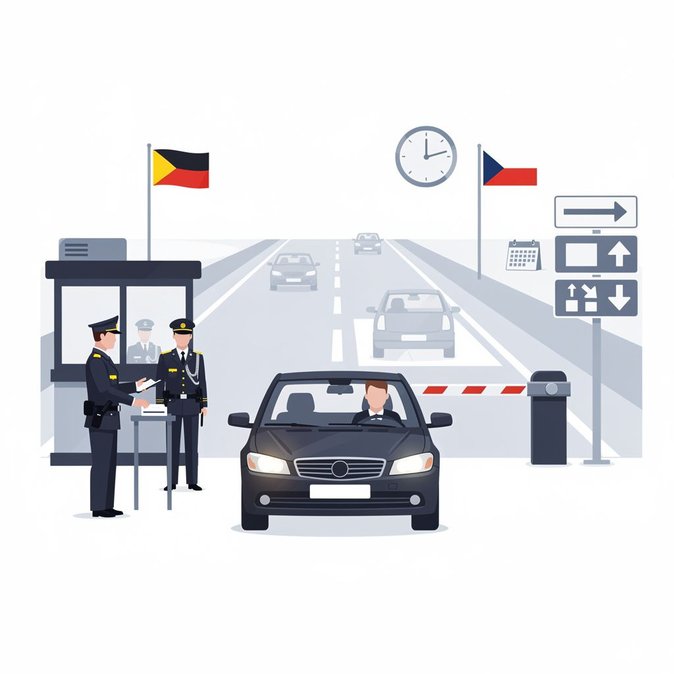
German customs officers near Waidhaus (Bavaria) pulled over a Romanian-registered van carrying seven passengers on 23 June. Checks revealed that one rider, a 39-year-old Moldovan, lacked valid entry documents. The Bundespolizei arrested the 24-year-old driver on suspicion of professional people smuggling after learning he expected a cash payment for the trip. On 25 June authorities announced a two-year Schengen re-entry ban and imminent deportation for the Moldovan, while the driver faces criminal charges that carry up to five years in prison. The case underscores Germany’s continued reliance on fixed and mobile checks along its “temporarily re-introduced” Czech border—controls that Brussels wants phased out under the new Schengen strategy. Federal Police say more than 1,900 people have been refused entry since the policy was tightened in May 2025, with Waidhaus a particular hotspot on the Prague-Nuremberg corridor. For corporate mobility planners the practical impact is time: long-distance buses and courier vans using the A6/A93 route can be held for document verification, adding 30–60 minutes per crossing. Companies transporting technicians from Eastern Europe should ensure passports, residence cards and A1 forms are on board and valid for the full stay. The incident also feeds the political narrative that Germany must keep inner-Schengen checks until the EU’s biometric Entry/Exit System has bedded in. If controls persist into the peak July travel season, exporters could face scheduling headaches for “just-in-time” deliveries from Czech suppliers. Logistics managers might consider alternate routings via Dresden or Regensburg, where spot-check intensity has been lower in recent weeks.
Source: Oberpfalz-Aktuell