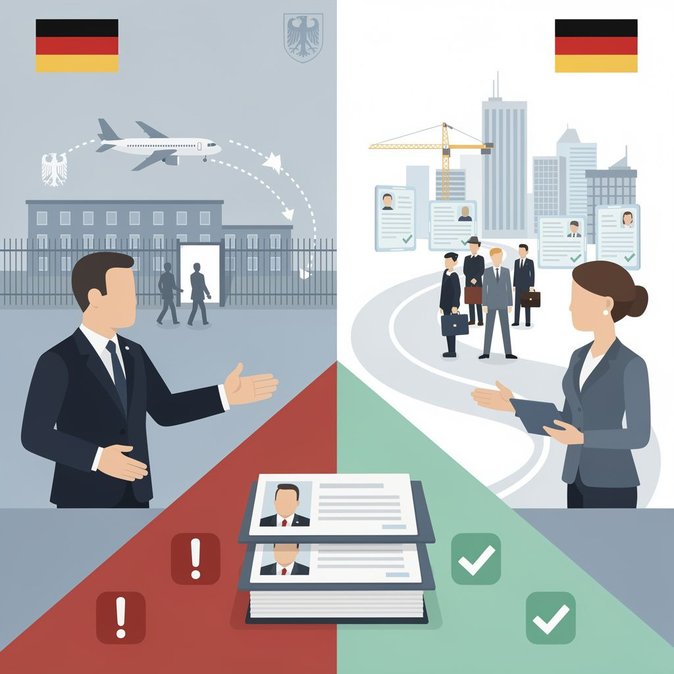
Speaking in the Dresden state parliament, Saxony’s Interior Minister Armin Schuster (CDU) staunchly defended the federal state’s Ausreisezentrum, a facility opened in 2025 to process migrants with little chance of asylum. Schuster claimed the centre has raised voluntary returns and reduced pressure on municipalities by preventing transfers of people who will ultimately have to leave. He linked the uptick to "stable" border controls and higher refusal rates at Germany’s Czech and Polish frontiers. The Left Party tabled a motion to close the facility, calling it "detention-like" and counter-productive to integration. Only 11 % of so-called Dublin transfers were successful in 2024–25, the party argued, leaving many asylum seekers in legal limbo for months. NGOs echoed the criticism, warning that concentrating return procedures in semi-secure settings risks normalising administrative detention and damages Germany’s reputation as a humanitarian destination. For employers, the controversy matters because Saxony hosts a cluster of semiconductor and battery-cell investments that rely on international labour. Lawyers note that people already working on tolerated (“Duldung”) status could face faster removal if regional authorities replicate the centre model. HR teams should therefore double-check the status of subcontractors and ensure any extension applications are filed early and fully documented. Nation-wide, the debate foreshadows changes in Germany’s new migration package, parts of which enter into force this month and make it easier to deport foreign nationals convicted of serious crimes while shortening pathways to permanent residence for integrated workers. Companies need to stay agile: stricter enforcement at one end of the system is being paired with liberalisation for skilled staff at the other. Political analysts say the showdown in Dresden is also a proxy fight over the balance between the EU’s new Common European Asylum System—which begins applying across the bloc this month—and Germany’s own, tougher border regime. How the issue plays out could influence whether temporary inner-Schengen border checks are finally lifted later this year.
Source: Süddeutsche Zeitung / dpa