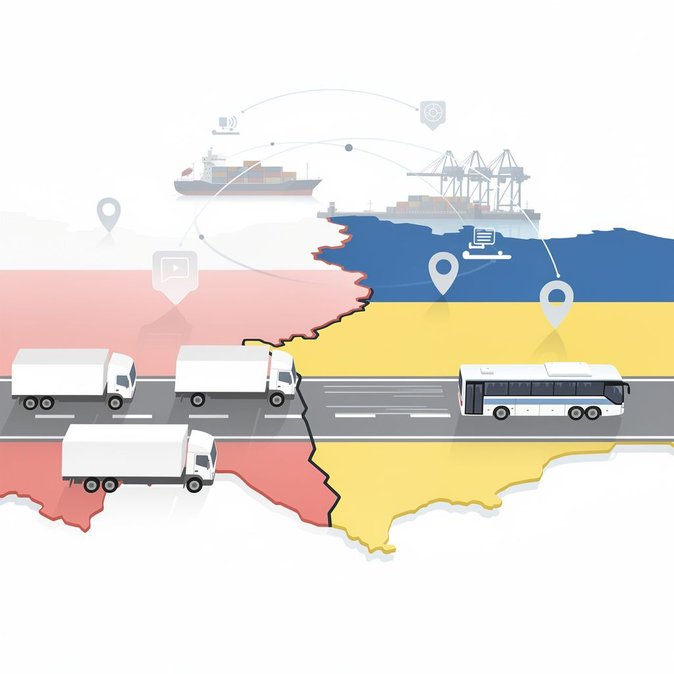
Meeting in Gdańsk on the opening day of the Ukraine Recovery Conference, Infrastructure Minister Dariusz Klimczak and Ukrainian Deputy-Prime-Minister Oleksii Kuleba sketched out a new blueprint to integrate ports on the Vistula and Danube with rail and road corridors feeding the Ukrainian border. The pair confirmed that Poland is ready to enter public–private partnerships for concession projects at Gdańsk and Gdynia that would dedicate berths to Ukrainian grain and military-aid cargo.
For companies and aid organisations whose staff will be moving more frequently between the two countries as these logistics corridors expand, VisaHQ can ease the paperwork burden. The online visa-service platform guides travellers through Polish and Ukrainian entry requirements, processes applications for work or transit documents, and offers real-time status updates—all accessible at https://www.visahq.com/poland/
A focal point was the SENT electronic cargo-tracking platform. Warsaw offered API access so Kyiv can pre-validate customs data, allowing Polish border posts to process sealed trucks in under six minutes—down from the current 20-minute average. Both sides also committed to completing the 187-kilometre broad-gauge rail extension from Hrubieszów to Gdańsk by 2028, slashing trans-shipment costs that have ballooned since Russia’s exit from the Black Sea grain deal. In the interim, a liberalised bilateral road-haulage agreement will lift annual permit caps for Ukrainian carriers moving humanitarian and commercial freight. Business groups welcomed the announcements. The Polish-Ukrainian Chamber of Commerce said automotive suppliers in Silesia rely on just-in-time components from Lviv; the new measures could halve storage costs now incurred as buffer stock against border delays. The projects dovetail with EU funding under the Connecting Europe Facility, but Poland insists that private investors can secure long-term returns through throughput guarantees backed by Ukraine’s reconstruction pledges. Advisory firm PwC estimates that every hour shaved off border formalities translates into €17 million in annual savings for shippers using the Three Seas corridor.
For companies and aid organisations whose staff will be moving more frequently between the two countries as these logistics corridors expand, VisaHQ can ease the paperwork burden. The online visa-service platform guides travellers through Polish and Ukrainian entry requirements, processes applications for work or transit documents, and offers real-time status updates—all accessible at https://www.visahq.com/poland/
A focal point was the SENT electronic cargo-tracking platform. Warsaw offered API access so Kyiv can pre-validate customs data, allowing Polish border posts to process sealed trucks in under six minutes—down from the current 20-minute average. Both sides also committed to completing the 187-kilometre broad-gauge rail extension from Hrubieszów to Gdańsk by 2028, slashing trans-shipment costs that have ballooned since Russia’s exit from the Black Sea grain deal. In the interim, a liberalised bilateral road-haulage agreement will lift annual permit caps for Ukrainian carriers moving humanitarian and commercial freight. Business groups welcomed the announcements. The Polish-Ukrainian Chamber of Commerce said automotive suppliers in Silesia rely on just-in-time components from Lviv; the new measures could halve storage costs now incurred as buffer stock against border delays. The projects dovetail with EU funding under the Connecting Europe Facility, but Poland insists that private investors can secure long-term returns through throughput guarantees backed by Ukraine’s reconstruction pledges. Advisory firm PwC estimates that every hour shaved off border formalities translates into €17 million in annual savings for shippers using the Three Seas corridor.