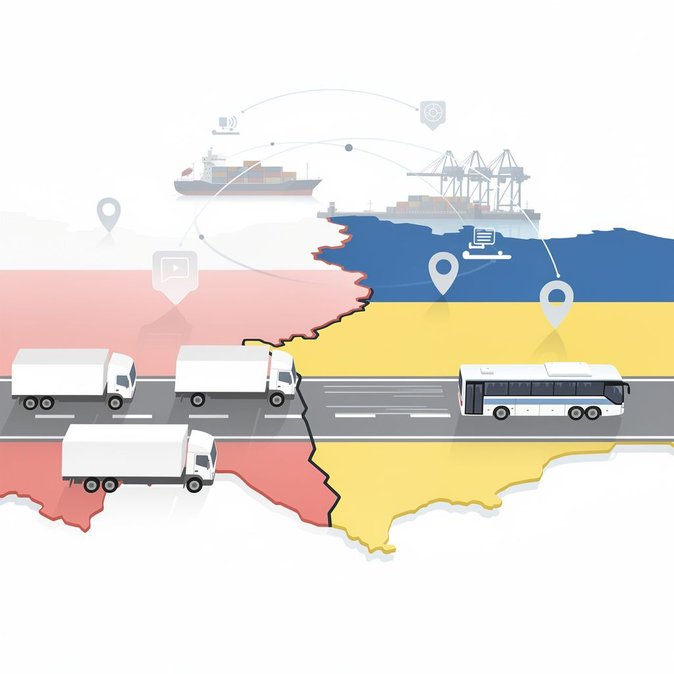
Eight-to-twelve-hour waits for buses at the Medyka–Shehyni crossing exploded onto social media overnight after Ukrainian Deputy Prime-Minister for Reconstruction Oleksii Kuleba told reporters that travellers were "spending half a day on the asphalt" before being processed. Speaking on the sidelines of the Ukraine Recovery Conference (URC 2026) in Gdańsk on 25 June, Kuleba said he had secured a Polish commitment to keep the checkpoint fully open during summer maintenance works and to add extra staff at peak hours. According to Poland’s Border Guard, lanes normally dedicated to buses have been periodically closed since 15 June while new security scanners are installed, slashing hourly capacity from 24 to 10 vehicles.
Travellers caught in these tailbacks often discover only at the last minute that their paperwork is incomplete. VisaHQ’s Poland page (https://www.visahq.com/poland/) lets individuals and corporate dispatchers double-check entry rules, secure any necessary visas or transit permits online, and receive alert emails whenever border regulations change—helping to shave precious minutes off an already long journey.
Freight operators complained that the knock-on effect pushed lorry queues at nearby Dorohusk–Yahodyn beyond 20 kilometres, costing an estimated €2 million per day in spoilage and demurrage charges. Infrastructure Minister Dariusz Klimczak announced an emergency plan that includes temporary mobile control booths, retro-fitting of e-gates for biometric passports and a pilot “green corridor” for EU-registered coaches. The government will also accelerate work on a digital pre-clearance module inside the SENT cargo-tracking system so that manifests can be risk-scored before a vehicle reaches the frontier. For corporate mobility managers the stakes are high. Polish-Ukrainian road traffic carries autoparts, FMCG and humanitarian supplies crucial to manufacturing plants in Silesia and Kyiv oblast alike. Lengthy delays force companies to reroute via Slovakia or Romania, driving up insurance and security costs. If the new measures succeed, industry will regain a predictable just-in-time corridor in the only EU country that still allows Ukrainian drivers visa-free entry for commercial trips. Experts say the episode is a reminder that even inside Schengen, temporary border checks and infrastructure bottlenecks can cripple supply chains. Multinationals moving staff between Warsaw, Lviv and beyond should monitor the SENT updates and schedule coach transfers for the early-morning window when queues are shortest.
Travellers caught in these tailbacks often discover only at the last minute that their paperwork is incomplete. VisaHQ’s Poland page (https://www.visahq.com/poland/) lets individuals and corporate dispatchers double-check entry rules, secure any necessary visas or transit permits online, and receive alert emails whenever border regulations change—helping to shave precious minutes off an already long journey.
Freight operators complained that the knock-on effect pushed lorry queues at nearby Dorohusk–Yahodyn beyond 20 kilometres, costing an estimated €2 million per day in spoilage and demurrage charges. Infrastructure Minister Dariusz Klimczak announced an emergency plan that includes temporary mobile control booths, retro-fitting of e-gates for biometric passports and a pilot “green corridor” for EU-registered coaches. The government will also accelerate work on a digital pre-clearance module inside the SENT cargo-tracking system so that manifests can be risk-scored before a vehicle reaches the frontier. For corporate mobility managers the stakes are high. Polish-Ukrainian road traffic carries autoparts, FMCG and humanitarian supplies crucial to manufacturing plants in Silesia and Kyiv oblast alike. Lengthy delays force companies to reroute via Slovakia or Romania, driving up insurance and security costs. If the new measures succeed, industry will regain a predictable just-in-time corridor in the only EU country that still allows Ukrainian drivers visa-free entry for commercial trips. Experts say the episode is a reminder that even inside Schengen, temporary border checks and infrastructure bottlenecks can cripple supply chains. Multinationals moving staff between Warsaw, Lviv and beyond should monitor the SENT updates and schedule coach transfers for the early-morning window when queues are shortest.