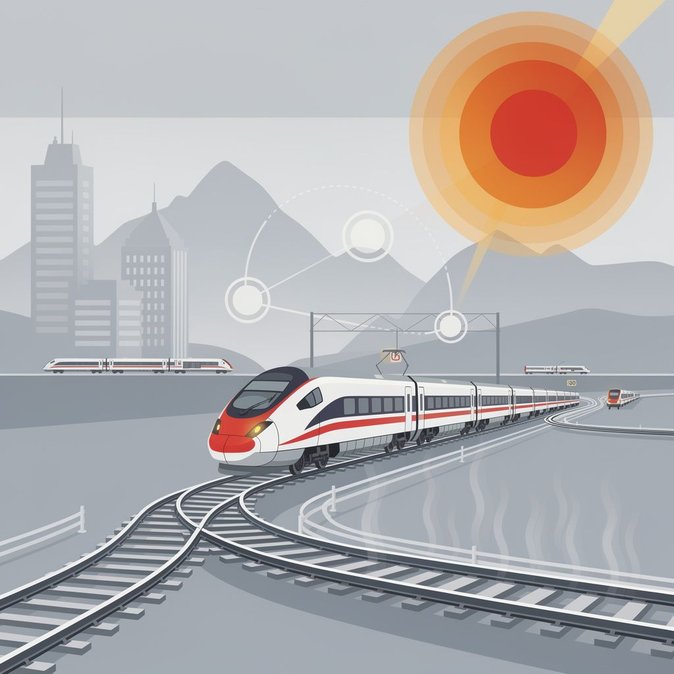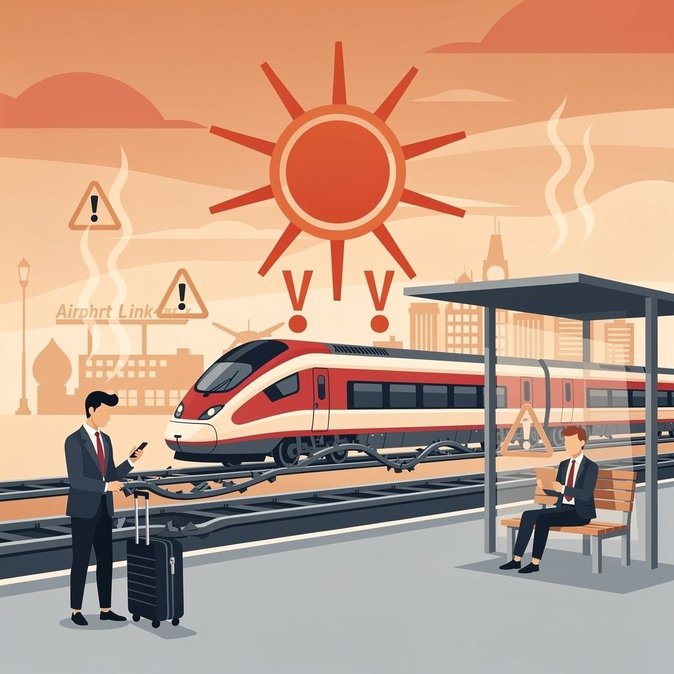
Austria’s national rail operator ÖBB has issued an unprecedented multi-day heat advisory, warning passengers that temperatures above 38 °C could lead to speed restrictions, temporary track closures and cascading delays across the network. The alert covers Friday through Monday and coincides with one of the busiest commuting periods before the start of the summer break. Extreme heat causes steel rails to expand; on lightly used lines they can buckle, while on high-speed routes the risk is electrical faults in overhead catenaries. To mitigate this, ÖBB engineers have begun slow-rolling freight services, watering ballast to reduce thermal stress and deploying thermal-imaging cars—measures that consume track capacity and lengthen journey times. In a press release, the company urged travellers to “postpone all non-essential trips” and to carry ample water and sun protection. Business travellers—and the many expatriates who shuttle between Vienna, Linz and Salzburg—face potential knock-on effects. Corporate mobility teams should monitor ÖBB’s online disruption map and consider shifting short-notice client meetings to video. Those connecting to Vienna Airport via the CAT express train should leave a wider buffer; any closure of the inner-city Stammstrecke would force travellers onto slower bus shuttles. Long term, ÖBB plans to expand the use of reinforced concrete sleepers and install automatic rail-stress monitoring sensors, an investment accelerated after last year’s derailment near St. Pölten. But with climate models predicting more frequent ‘tropical’ nights, Austria’s railways—an essential backbone for sustainable mobility—will need continuous upgrades. Multinationals should track the carrier’s resilience timeline when drafting future travel-policy carbon targets.
Source: ORF Wien