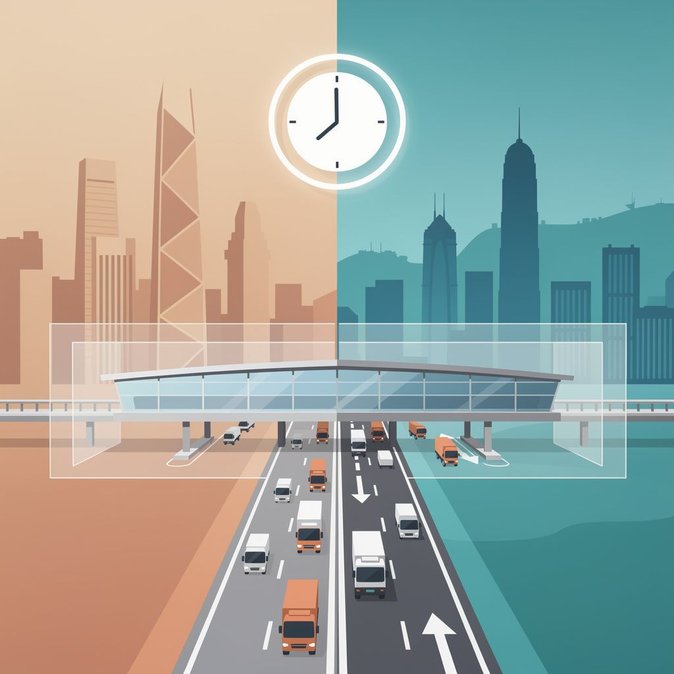
In a landmark decision late on 26 June, the Standing Committee of the National People’s Congress (NPCSC) authorised the Hong Kong Special Administrative Region to exercise jurisdiction over a newly reclaimed “Port Area” within the future Huanggang/Lok Ma Chau control point. The move clears a major legal hurdle for rebuilding the decades-old border crossing into a 24-hour, one-stop facility modelled on the West Kowloon high-speed rail terminus. Under the arrangement, Hong Kong will lease the 22-hectare Port Area—covering departure halls, road decks and part of the Shenzhen bridge span—until 30 June 2047, with an option to renew. Within that zone Hong Kong laws will apply, and immigration, customs and police officers from both jurisdictions will conduct “co-operative inspection, one-time release” procedures that allow passengers and cargo to clear both sides in a single stop. The redevelopment is part of a Rmb 40 billion bilateral plan to replace the over-capacity Lo Wu and current Huanggang facilities with a modern, multimodal complex capable of processing 20 million passengers per month—up from the present 8 million. Designs include an underground pedestrian tunnel linking to Hong Kong’s forthcoming Northern Link railway extension, automated vehicle clearance bays and green-lane warehousing for e-commerce parcels. For employers the biggest gain is time. Government modelling suggests daily commuters could see door-to-door travel shrink by 25 minutes each way, while trucks would cut border dwell times from 40 minutes to under 10. Logistics operators anticipate annual savings of HK$2 billion in fuel and labour once the port reaches full capacity in 2030. The decision also signals deeper legal integration inside the Greater Bay Area, yet it revives civil-liberty debates first aired during West Kowloon’s co-location battle in 2018. Lawyers note that mainland officers will be empowered to enforce national laws inside the Shenzhen side of the facility, while Hong Kong officers wield authority in the leased Port Area—an inversion of usual jurisdictional lines that demands clear signage and redress mechanisms to avoid confusion. The HKSAR government welcomed the ruling as “solid evidence of central support” and promised to consult chambers of commerce on construction phasing, expected to begin in Q1 2027. Until then, travellers can look forward to incremental works such as temporary departure halls and smart-gate pilots scheduled for early 2026-27.
Source: RTHK