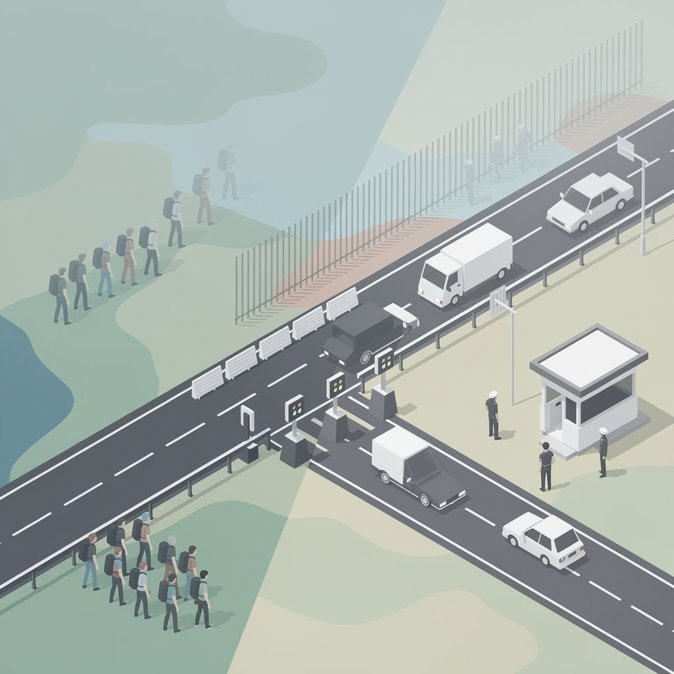
Poland’s Institute of Meteorology and Water Management (IMGW) triggered its top, third-degree heat warning on Saturday 27 June after temperatures in the central Mazovia and Łódź regions touched 42 °C – the highest June reading ever recorded in the country. Under Polish civil-protection law a level-3 alert requires all critical-infrastructure operators to activate business-continuity procedures. PKP Intercity imposed a 120-km/h precautional speed cap on sections of the Warsaw–Poznań and Kraków–Katowice main lines where track temperatures exceeded 60 °C, adding up to 35 minutes to journeys on the busy West–East corridor and prompting the carrier to encourage passengers to rebook free of charge. Warsaw-Chopin Airport switched to single-runway operations between 14:00 and 17:00 when tarmac readings topped 55 °C; LOT Polish Airlines cancelled four domestic rotations and offered penalty-free changes on all 27 June tickets. On the roads, the General Directorate for National Roads and Motorways (GDDKiA) ordered a temporary ban on heavy goods vehicles above 12 tonnes between 11:00 and 20:00 in seven voivodeships, including Greater Poland and Lower Silesia, citing asphalt softening risks. Border services warned of knock-on queues of 6–8 kilometres for south-bound lorries at Świecko (Germany) and Budzisko (Lithuania) as trucks were redirected to overnight slots. Employers were reminded that the Labour Code obliges them to provide cool drinks and shaded rest areas once the mercury tops 28 °C indoors or 25 °C outdoors. Multinationals with shared-service centres in Kraków and Wrocław told staff to work from home, while several industrial parks moved to split shifts to protect assembly-line workers. IMGW says the warning stays in force until Monday evening, but temperatures should ease to below 30 °C by Tuesday. For mobility managers the episode underscores the need for climate-driven contingency planning: airlines now treat extreme heat like winter storms, railways factor lower speed curves into SLAs, and supply-chain teams must consider heat-related truck bans when scheduling just-in-time deliveries in Central Europe.
Source: Xinhua News Agency