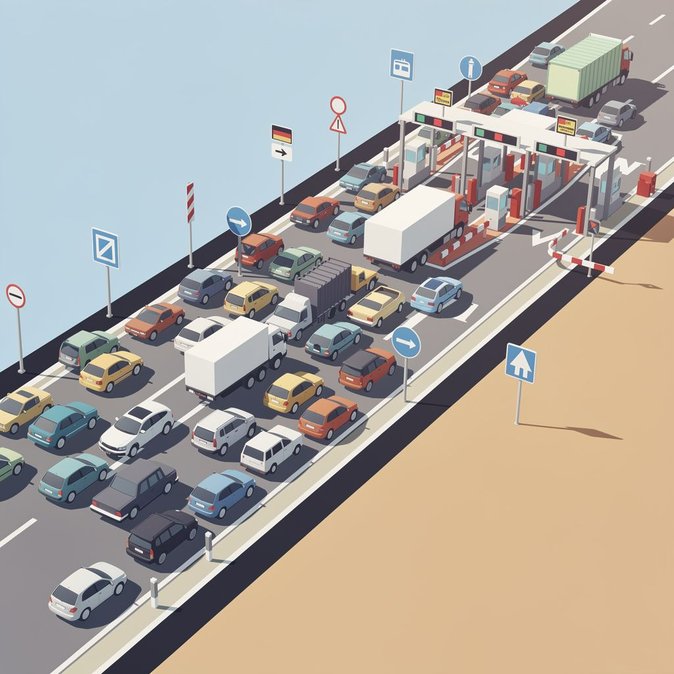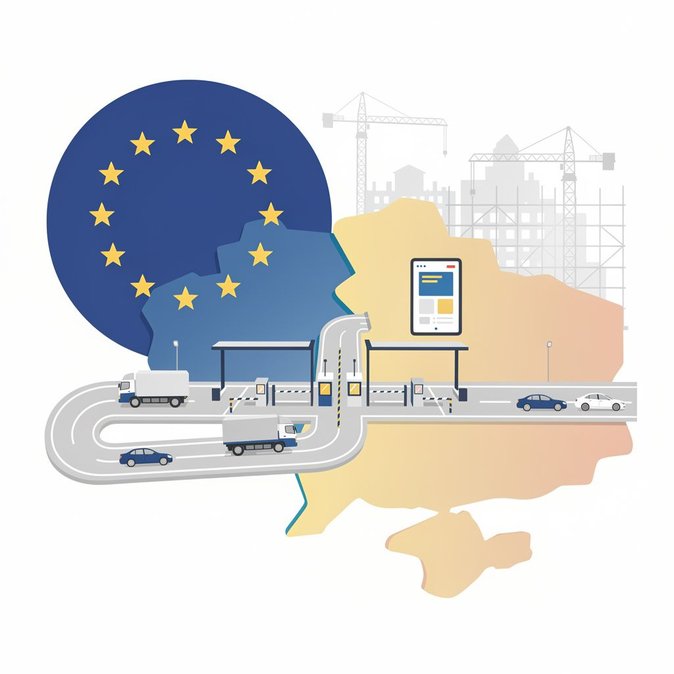
At the Ukraine Recovery Conference in Gdańsk, European Commission President Ursula von der Leyen announced on 25 June the disbursement of €3.2 billion – the inaugural slice of a €90 billion macro-financial loan. Embedded in the package is €96 million dedicated to roads, bridges and border-crossing infrastructure along Ukraine’s western corridors, including the busy Medyka-Shehyni and Dorohusk-Yahodyn checkpoints with Poland. Poland’s Infrastructure Minister Katarzyna Sobolewska welcomed the funding, noting that truck queues at Medyka averaged 28 hours in May. The money will finance additional “green lanes” for medical, perishable and humanitarian cargo as well as digital TIR pilot projects that cut paperwork time by 40 %. Construction tenders are expected to open in August with works starting early 2027. Separately, the EU-backed ‘European Flagship Fund for the Reconstruction of Ukraine’, which Warsaw co-sponsors, became operational with an initial €500 million. Polish civil-engineering firms such as Budimex and Mostostal are positioning for contracts on both sides of the frontier, potentially creating new short-term assignment opportunities for engineers under Poland’s Van-der-Elst rules. For companies moving goods or staff between Poland and Ukraine, the planned infrastructure should ease bottlenecks over the medium term, but managers are advised to factor in temporary lane closures during construction. The Polish Border Guard will pilot an automated pre-clearance app linked to e-TIR; carriers should start integrating the interface into fleet telematics.
Source: Agence Europe