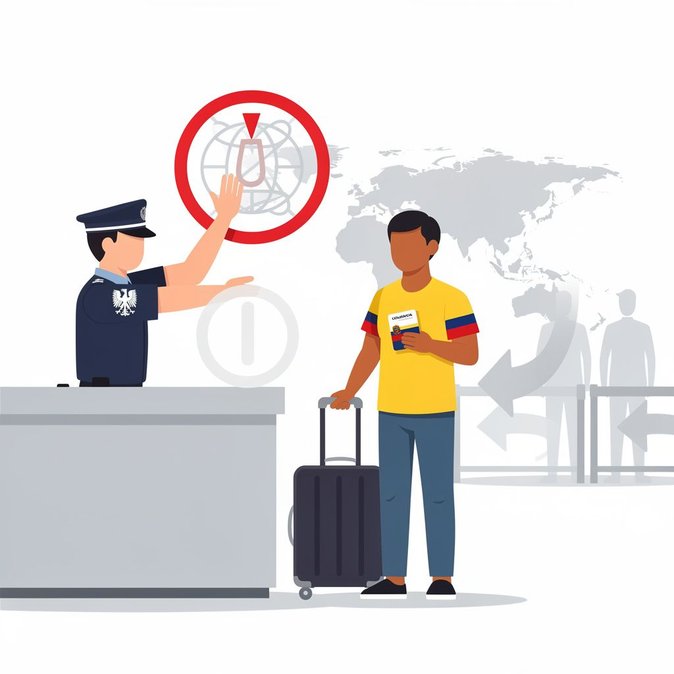
The European Commission on 26 June tabled a draft decision to prolong the Temporary Protection Directive (TPD) for refugees fleeing Russia’s invasion of Ukraine by a further two years, until 4 March 2028. The mechanism, first activated in March 2022 and currently covering more than 4 million displaced Ukrainians, grants the right to live, work, study and access healthcare anywhere in the European Union without having to go through an asylum procedure. What makes the new proposal politically sensitive is a clause requested by the government in Kyiv: newcomers who are men of conscription age and therefore prohibited from leaving Ukraine during the state of war would no longer be eligible for temporary protection. Brussels argues that the carve-out responds to Ukraine’s mobilisation needs and will help curb abuses whereby men evade the draft by claiming the TPD. Existing beneficiaries – roughly 380 000 of whom reside in Poland – would keep their status, but fresh arrivals in the excluded category would have to apply for ordinary visas or asylum. For Poland, which hosts Europe’s largest Ukrainian refugee community, the change is substantial. Border officers would have to distinguish between returning male refugees (still protected) and newly arriving men (no longer eligible). Employers that rely on Ukrainian staff in construction, logistics and seasonal agriculture must be prepared for tighter paperwork checks and the possibility that some labour permits will be refused if linked to ineligible newcomers. The Ministry of Family and Social Policy signalled it will update employer guidance once the Council formally adopts the measure later this year. HR teams should start auditing their Ukrainian workforces now: ensure that residence-permit renewal calendars take account of a 2028 horizon and identify any staff whose family members could be caught by the new exclusion. Companies that rely on frequent cross-border travel should also watch for changes in re-entry rules once the directive is amended, as Poland may re-impose stricter document checks on the Ukrainian frontier to enforce the age carve-out.
Source: Onet / AFP