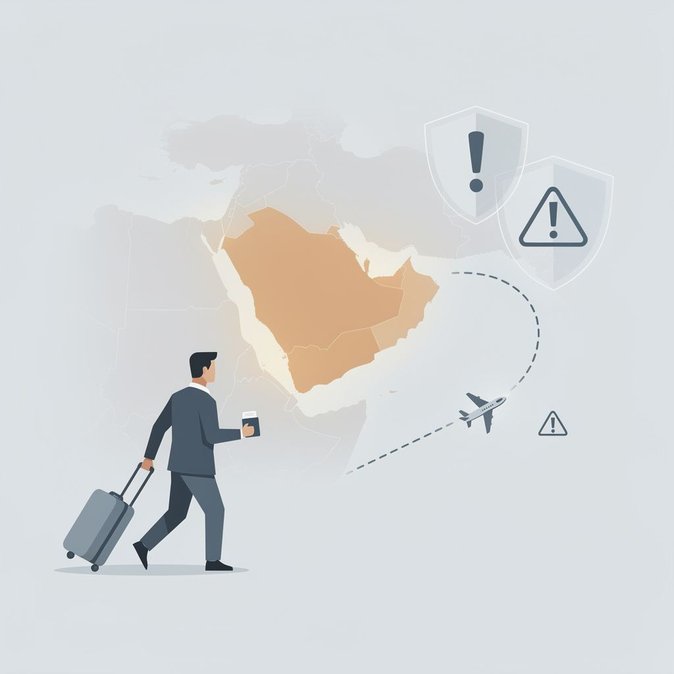
Late on June 27 the U.S. State Department updated its country-by-country travel-advisory feed, raising Oman from Level 2 (exercise increased caution) to Level 3 (reconsider travel). The change—reflected in the Department’s RSS feed and mirrored by risk-tracker platforms on June 28—cites “heightened regional tensions and potential drone activity near critical infrastructure.”
VisaHQ can simplify the administrative load this shift creates. Through its platform (https://www.visahq.com/united-states/), travel managers and individual travelers can instantly verify Oman’s latest entry requirements, arrange expedited visa services, and receive real-time status updates—helping organizations stay compliant even as advisory levels fluctuate.
A Level 3 rating does not bar travel, but it triggers additional employer duty-of-care obligations under many corporate travel-risk policies and often invalidates basic business-travel insurance. Travel managers must now secure senior-executive approval and document mitigation measures—ranging from GPS tracking and secure airport transfers to contingency evacuation plans—before staff can depart for Muscat or Dhofar. Oil-and-gas contractors with rotational staff in the Sultanate are particularly affected: some insurers are already demanding surcharge premiums or excluding maritime movements through the Strait of Hormuz. Companies should review local security-provider contracts and confirm that emergency medical-evacuation vendors can still operate under Level 3 restrictions. The advisory shift also illustrates how quickly regional flare-ups reverberate through global-mobility programs. Visa holders working in Oman should enrol in the Smart Traveler Enrollment Program (STEP) to receive real-time alerts, and HR should update crisis-communication trees. If tensions ease, the rating may return to Level 2 at the next six-hour data refresh, but until then corporate travelers face higher compliance hurdles. Because advisory levels feed directly into several governmental and private-sector risk algorithms, companies that auto-screen itineraries should update rule sets immediately to avoid inadvertent policy violations.

VisaHQ can simplify the administrative load this shift creates. Through its platform (https://www.visahq.com/united-states/), travel managers and individual travelers can instantly verify Oman’s latest entry requirements, arrange expedited visa services, and receive real-time status updates—helping organizations stay compliant even as advisory levels fluctuate.
A Level 3 rating does not bar travel, but it triggers additional employer duty-of-care obligations under many corporate travel-risk policies and often invalidates basic business-travel insurance. Travel managers must now secure senior-executive approval and document mitigation measures—ranging from GPS tracking and secure airport transfers to contingency evacuation plans—before staff can depart for Muscat or Dhofar. Oil-and-gas contractors with rotational staff in the Sultanate are particularly affected: some insurers are already demanding surcharge premiums or excluding maritime movements through the Strait of Hormuz. Companies should review local security-provider contracts and confirm that emergency medical-evacuation vendors can still operate under Level 3 restrictions. The advisory shift also illustrates how quickly regional flare-ups reverberate through global-mobility programs. Visa holders working in Oman should enrol in the Smart Traveler Enrollment Program (STEP) to receive real-time alerts, and HR should update crisis-communication trees. If tensions ease, the rating may return to Level 2 at the next six-hour data refresh, but until then corporate travelers face higher compliance hurdles. Because advisory levels feed directly into several governmental and private-sector risk algorithms, companies that auto-screen itineraries should update rule sets immediately to avoid inadvertent policy violations.