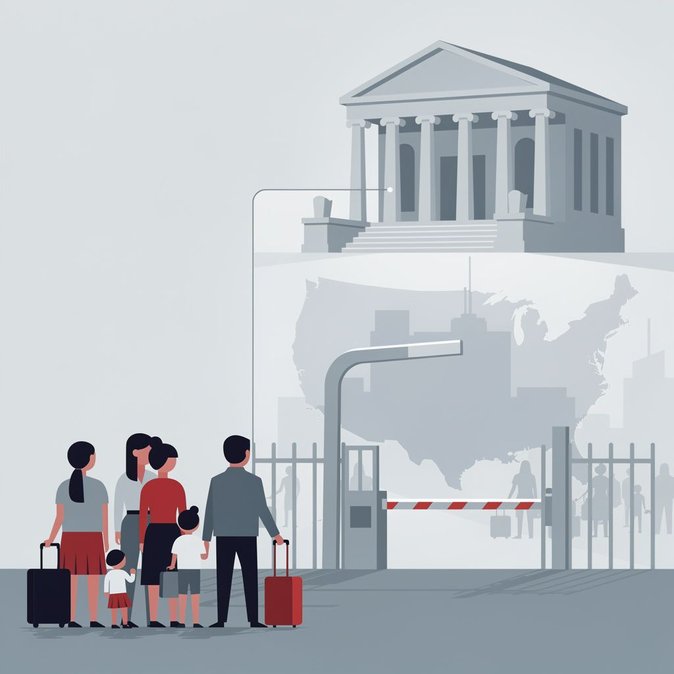
U.S. Secretary of Homeland Security Markwayne Mullin used a Sunday-morning appearance on CNN’s “State of the Union” to signal the toughest line yet toward the more than 670,000 foreign nationals living in the United States under Temporary Protected Status (TPS). “Either try to fill out the paperwork and be here underneath a permanent status, or we’ll help you get back to your country,” he said, adding that DHS would even finance a plane ticket and a one-time USD 2,100 resettlement grant for those who leave voluntarily. The television interview comes just three days after the Supreme Court narrowly upheld the Trump Administration’s authority to terminate TPS for Haiti and Syria, removing the last legal barrier to a phase-out that immigration advocates say will eventually affect nationals of 16 countries.
Although the department has not yet published a formal Federal Register notice, Mullin’s message makes clear that TPS beneficiaries should prepare for the government to serve them with 18-month wind-down dates as soon as this summer.
For TPS holders exploring longer-term solutions, professional visa-advisory platforms such as VisaHQ can be invaluable. The company’s U.S. portal (https://www.visahq.com/united-states/) walks applicants through documentation and timing requirements for dozens of alternative statuses—from family-based adjustments to employment visas—and offers corporate accounts for employers juggling multiple cases. By centralizing deadlines and generating customized checklists, VisaHQ helps both workers and HR teams stay compliant while they assess post-TPS options.
For employers, the remarks inject fresh uncertainty into already-strained workforce-planning cycles. TPS holders work legally in every major U.S. industry—from construction and hospitality to nursing homes and high-tech—and human-resources departments will now need contingency plans to replace employees who lose their work authorization. Companies that pursue permanent sponsorship should be ready to accelerate PERM and I-140 filings, while those unable to do so may face operational gaps and higher recruiting costs. Compliance managers should also re-examine I-9 reverification schedules: once DHS issues a formal termination notice, affected employees will receive a specific end-date for their employment authorization documents (EADs). Employers that fail to update I-9s on time face civil penalties of up to USD 2,507 per violation.
Finally, global mobility teams should brief executives on the potential for negative public-relations fallout if large-scale layoffs of TPS workers occur in customer-facing roles.
On a policy level, Mullin’s comments preview a broader Administration strategy to narrow humanitarian programs in favor of employment-based immigration. Observers expect DHS to publish a proposed rule this fall raising the bar for new TPS designations and requiring applicants to prove they will not become a “public charge.” If implemented, the rule would further limit pathways for low-income migrants while increasing demand for employer-sponsored visas such as H-2B and EB-3.

Although the department has not yet published a formal Federal Register notice, Mullin’s message makes clear that TPS beneficiaries should prepare for the government to serve them with 18-month wind-down dates as soon as this summer.
For TPS holders exploring longer-term solutions, professional visa-advisory platforms such as VisaHQ can be invaluable. The company’s U.S. portal (https://www.visahq.com/united-states/) walks applicants through documentation and timing requirements for dozens of alternative statuses—from family-based adjustments to employment visas—and offers corporate accounts for employers juggling multiple cases. By centralizing deadlines and generating customized checklists, VisaHQ helps both workers and HR teams stay compliant while they assess post-TPS options.
For employers, the remarks inject fresh uncertainty into already-strained workforce-planning cycles. TPS holders work legally in every major U.S. industry—from construction and hospitality to nursing homes and high-tech—and human-resources departments will now need contingency plans to replace employees who lose their work authorization. Companies that pursue permanent sponsorship should be ready to accelerate PERM and I-140 filings, while those unable to do so may face operational gaps and higher recruiting costs. Compliance managers should also re-examine I-9 reverification schedules: once DHS issues a formal termination notice, affected employees will receive a specific end-date for their employment authorization documents (EADs). Employers that fail to update I-9s on time face civil penalties of up to USD 2,507 per violation.
Finally, global mobility teams should brief executives on the potential for negative public-relations fallout if large-scale layoffs of TPS workers occur in customer-facing roles.
On a policy level, Mullin’s comments preview a broader Administration strategy to narrow humanitarian programs in favor of employment-based immigration. Observers expect DHS to publish a proposed rule this fall raising the bar for new TPS designations and requiring applicants to prove they will not become a “public charge.” If implemented, the rule would further limit pathways for low-income migrants while increasing demand for employer-sponsored visas such as H-2B and EB-3.