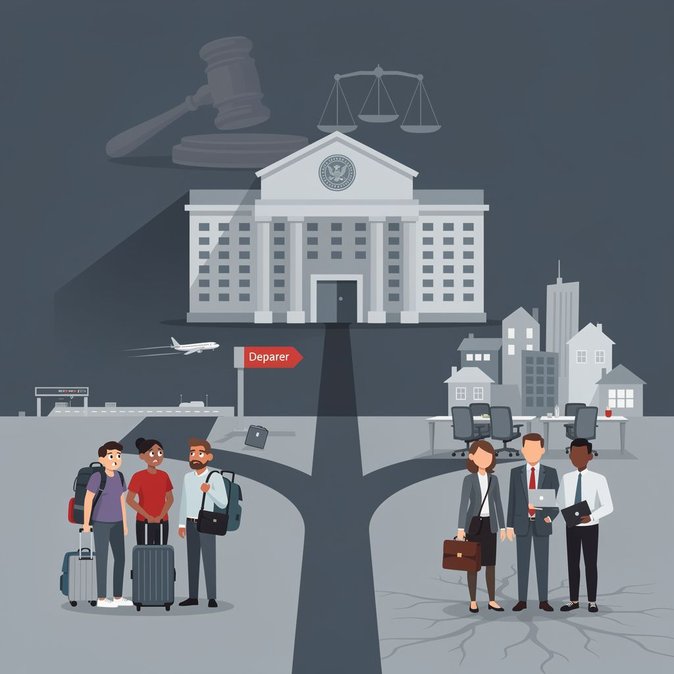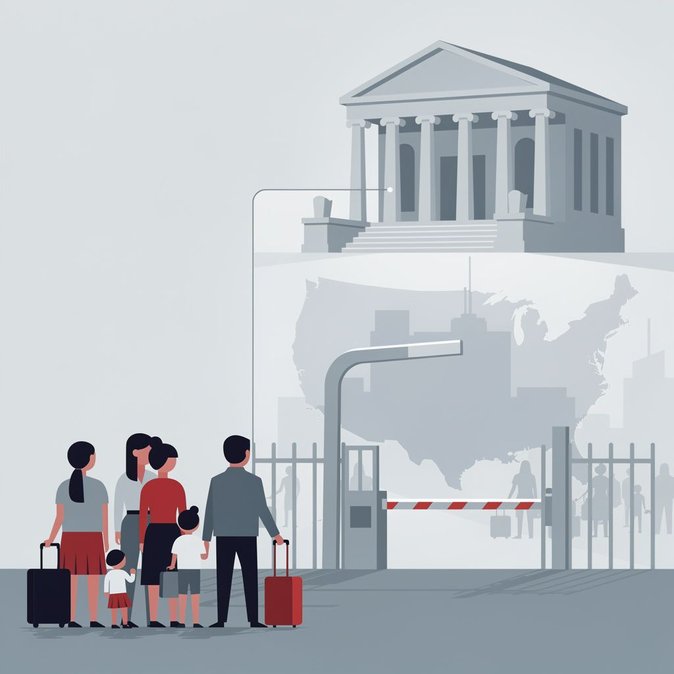
In a single blockbuster day, the U.S. Supreme Court released three separate opinions that together hand President Trump sweeping new authority over every stage of the immigration pipeline—from the border to the courtroom. • In Mullin v. Al Otro Lado, the majority ruled that asylum seekers who present themselves at a port of entry but have not yet physically crossed the line have no statutory right even to start the asylum process. Border officers may now block them from stepping onto U.S. soil, short-circuiting claims before they can be filed. • In Blanche v. Lau, the Court said that lawful-permanent-resident (green-card) holders may be refused re-entry or summarily deported on the mere “reasonably held” suspicion that they once committed a crime of “moral turpitude.” The phrase is undefined in statute, leaving wide discretion to frontline officers. • Finally, in Mullin v. Doe, the justices upheld the administration’s termination of Temporary Protected Status (TPS) for Haitians, Syrians and other groups, stripping humanitarian protections from more than a million long-time residents. Legal scholars note that the opinions resurrect a near-total “plenary power” doctrine the Court had gradually retreated from over the past 30 years. By treating immigration enforcement as a core element of national sovereignty, the majority insulated most executive decisions from ordinary judicial review. Business immigration attorneys warn that the rulings remove an entire layer of due-process predictability employers rely on when assigning staff internationally. Practical impacts will be felt immediately at U.S. ports and consulates. Companies may see returning LPR employees pulled into secondary inspection and denied admission; HR teams should build contingency plans and consider filing fresh H-1B and L-1 petitions as backups. Humanitarian agencies predict sharp increases in irregular border crossings as would-be asylum seekers avoid formal ports entirely. State governments already facing labour shortages fear accelerated population decline—a concern echoed by demographers interviewed by public radio. Longer term, the trilogy signals to lower courts that they should show extreme deference to presidential proclamations that affect immigration numbers, categories, or procedures. Unless Congress acts, immigration policy will hinge more than ever on who occupies the White House—and corporate global-mobility managers will need to track the electoral calendar almost as closely as the visa calendar.