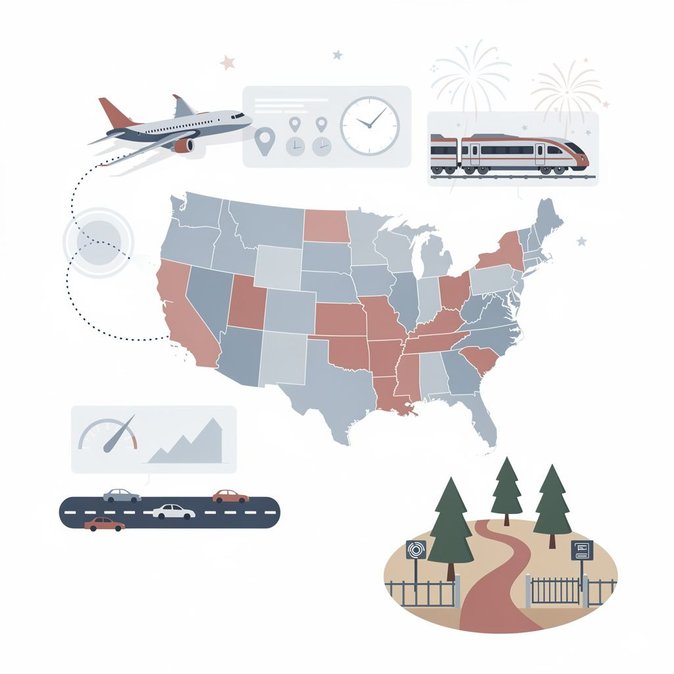
With Independence Day expected to draw the largest domestic travel volume since 2019, eight federal agencies—including TSA, FAA, DHS, DOT, NHTSA, the State Department, Amtrak and the National Park Service—unveiled a coordinated safety strategy designed to keep highways, airports, rail lines and national parks running smoothly from 1–7 July. The plan, announced late Saturday, layers aviation flight-restriction zones, surge staffing, highway patrol blitzes and real-time crowd-monitoring technology. Among aviation measures, the FAA will activate temporary flight restrictions over major fireworks displays in New York, Boston, Chicago and Washington, while TSA will deploy 1,200 additional screeners to the ten busiest hubs and expand “TSA PreCheck Touchless ID” pilot lanes. The State Department, anticipating a spike in outbound Americans, has set up pop-up passport-renewal clinics at JFK, LAX and MIA with 24-hour turnaround for emergency business travel. Road-safety efforts include NHTSA’s “Drive Sober or Get Pulled Over” holiday expansion and DOT’s mobile-work-zone alerts on the Interstate Highway System. Amtrak, facing record bookings on the Northeast Corridor, will borrow railcars from commuter agencies to run 20 extra daily frequencies. Meanwhile, the National Park Service is capping vehicle entries at Zion, Yosemite and Acadia during peak hours and requiring time-entry reservations—critical information for relocation teams planning pre-assignment scouting trips. The initiative also features a single public-facing dashboard—travel.gov/July4—aggregating airport security wait times, FAA ground-delay programs, Amtrak seat availability and national-park entry slots. Global mobility managers should share the link with employees on summer assignments and advise them to budget extra connection time, particularly through East Coast hubs where afternoon thunderstorms routinely trigger Air Traffic Management delays. Officials said the strategy will serve as a template for FIFA World Cup match days later this month, giving travel coordinators an early look at how multi-agency command centers will operate during mega-events.
Source: Travel and Tour World