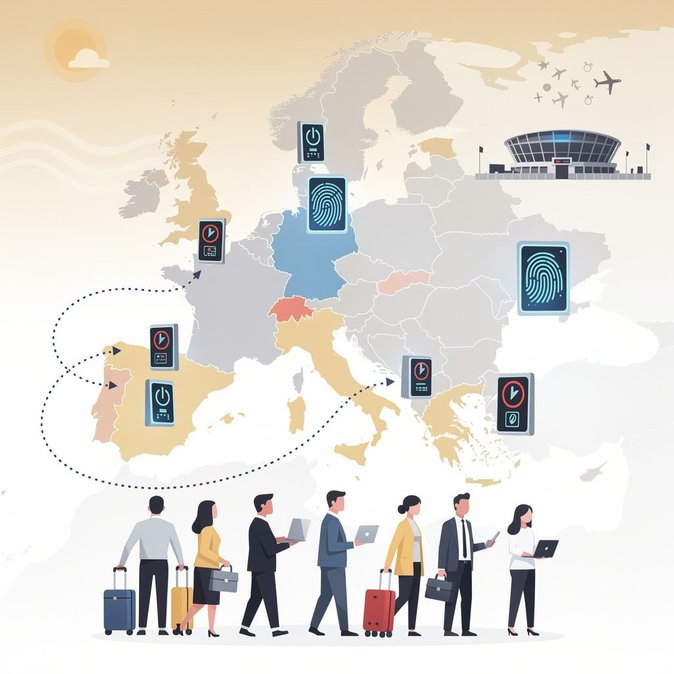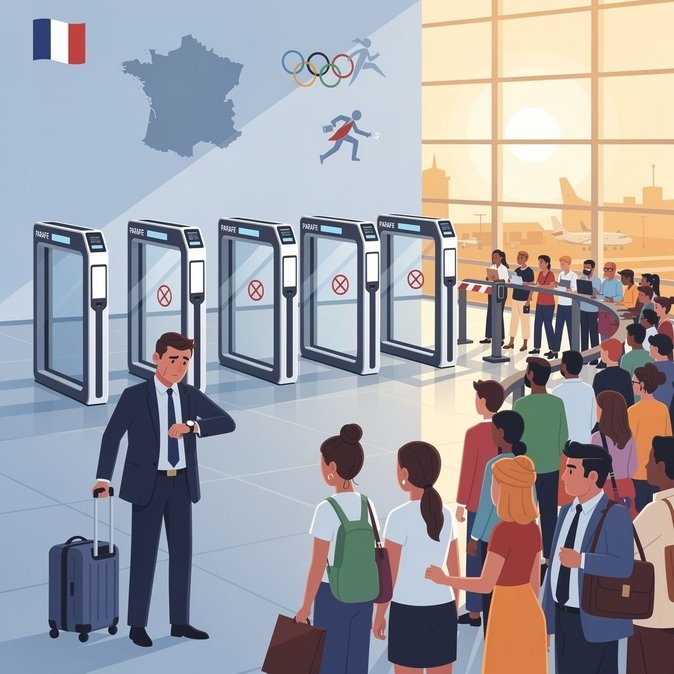
Frustration with the European Entry/Exit System (EES) reached new heights on 29 June as French media outlet The Connexion published a wave of reader complaints about closed PARAFE e-gates at Nice-Côte d’Azur Airport. Since the EES became fully operational on 10 April, airports must capture fingerprints and a facial image from every non-EU traveller on first entry – a process designed for automated kiosks but often carried out manually due to equipment or staffing shortfalls. Passengers arriving from London last weekend reported queues of more than an hour despite banks of idle e-gates.
Travellers looking for a sanity check before they fly can turn to VisaHQ’s France hub (https://www.visahq.com/france/), where step-by-step visa tools, biometric entry updates, and on-the-ground alerts are collated in one place—handy for global-mobility teams and holidaymakers alike who want to sidestep border surprises.
Airlines such as Wizz Air have advised arriving three hours before departure, but critics note that many carriers only open check-in two hours ahead, rendering the advice meaningless. Industry bodies IATA and Airlines for Europe warn that peak-summer waits could reach six hours unless airports speed up biometric collection. For France, reputational risk is acute: the country is bracing for unprecedented passenger volumes during the July–August holiday season and the Paris 2026 Summer Olympics. In addition to business inconvenience, long immigration lines threaten transit-time guarantees written into many corporate travel insurance policies. Border-police unions argue that software glitches in EU-LISA’s central database and slow delivery of mobile-enrolment kits are to blame. The Interior Ministry insists that all 25 designated French air, sea and rail hubs will have sufficient kiosks by September, but industry observers doubt the timeline. Until then, global-mobility teams should brief travellers to expect manual processing, especially at regional airports such as Nice, Marseille and Toulouse.
Travellers looking for a sanity check before they fly can turn to VisaHQ’s France hub (https://www.visahq.com/france/), where step-by-step visa tools, biometric entry updates, and on-the-ground alerts are collated in one place—handy for global-mobility teams and holidaymakers alike who want to sidestep border surprises.
Airlines such as Wizz Air have advised arriving three hours before departure, but critics note that many carriers only open check-in two hours ahead, rendering the advice meaningless. Industry bodies IATA and Airlines for Europe warn that peak-summer waits could reach six hours unless airports speed up biometric collection. For France, reputational risk is acute: the country is bracing for unprecedented passenger volumes during the July–August holiday season and the Paris 2026 Summer Olympics. In addition to business inconvenience, long immigration lines threaten transit-time guarantees written into many corporate travel insurance policies. Border-police unions argue that software glitches in EU-LISA’s central database and slow delivery of mobile-enrolment kits are to blame. The Interior Ministry insists that all 25 designated French air, sea and rail hubs will have sufficient kiosks by September, but industry observers doubt the timeline. Until then, global-mobility teams should brief travellers to expect manual processing, especially at regional airports such as Nice, Marseille and Toulouse.