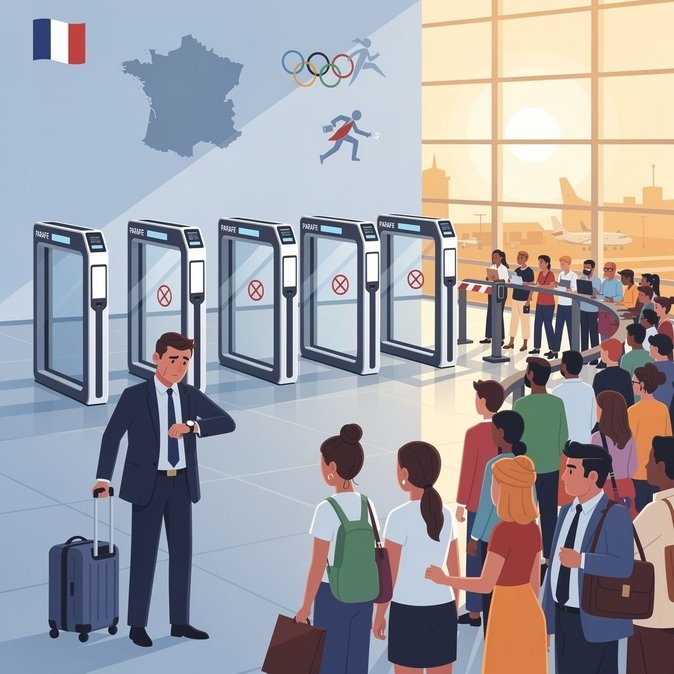
Airports of Rome chief executive Marco Troncone on 29 June urged the European Commission to allow a temporary pause of the Entry/Exit System (EES) during July–August, warning of “queues of several hours” at Fiumicino and Ciampino. Although the plea comes from Italy, its implications are keenly felt in France, where similar infrastructure bottlenecks have already produced long lines at Charles-de-Gaulle, Orly and Lyon.
For travelers and employers looking to navigate these shifting border controls smoothly, VisaHQ provides a one-stop online service to check Schengen entry rules, monitor any EES suspension updates, and arrange expedited document processing. Its France-focused portal (https://www.visahq.com/france/) consolidates the latest EU and national advisories, helping passengers and mobility teams prepare paperwork and timing before they reach the biometric kiosks.
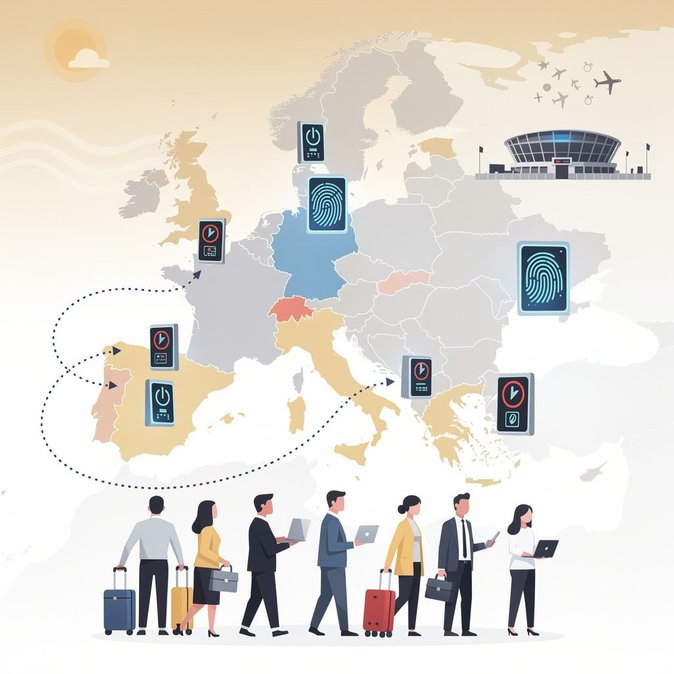
EU rules already permit partial suspension of biometric capture at peak times, but industry bodies want a blanket waiver until staffing levels and kiosk numbers improve. French airport operators ADP and VINCI are watching the Italian gambit closely; a coordinated southern-European push could give Paris political cover to seek its own moratorium, especially with the Olympics increasing passenger flows by an estimated 15 percent. For multinationals routing staff through the Schengen area, divergent national policies pose compliance risks: a traveller enrolled in Spain may still face first-time procedures in France if suspension rules differ. Immigration counsel therefore advise carrying extra buffer time between connections and ensuring passports remain machine-readable after repeated handling. If Brussels declines the suspension request, airports must rely on manual backup. That would inflate overtime costs for France’s border-police units, already strained by rolling strike action over pay. Either outcome – suspension or staff surge – has budgetary and planning consequences for corporate mobility teams.
For travelers and employers looking to navigate these shifting border controls smoothly, VisaHQ provides a one-stop online service to check Schengen entry rules, monitor any EES suspension updates, and arrange expedited document processing. Its France-focused portal (https://www.visahq.com/france/) consolidates the latest EU and national advisories, helping passengers and mobility teams prepare paperwork and timing before they reach the biometric kiosks.
EU rules already permit partial suspension of biometric capture at peak times, but industry bodies want a blanket waiver until staffing levels and kiosk numbers improve. French airport operators ADP and VINCI are watching the Italian gambit closely; a coordinated southern-European push could give Paris political cover to seek its own moratorium, especially with the Olympics increasing passenger flows by an estimated 15 percent. For multinationals routing staff through the Schengen area, divergent national policies pose compliance risks: a traveller enrolled in Spain may still face first-time procedures in France if suspension rules differ. Immigration counsel therefore advise carrying extra buffer time between connections and ensuring passports remain machine-readable after repeated handling. If Brussels declines the suspension request, airports must rely on manual backup. That would inflate overtime costs for France’s border-police units, already strained by rolling strike action over pay. Either outcome – suspension or staff surge – has budgetary and planning consequences for corporate mobility teams.