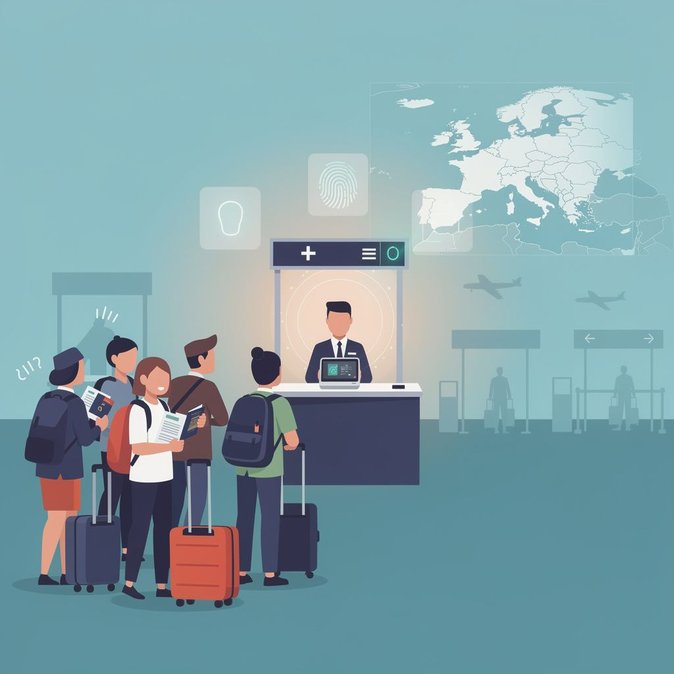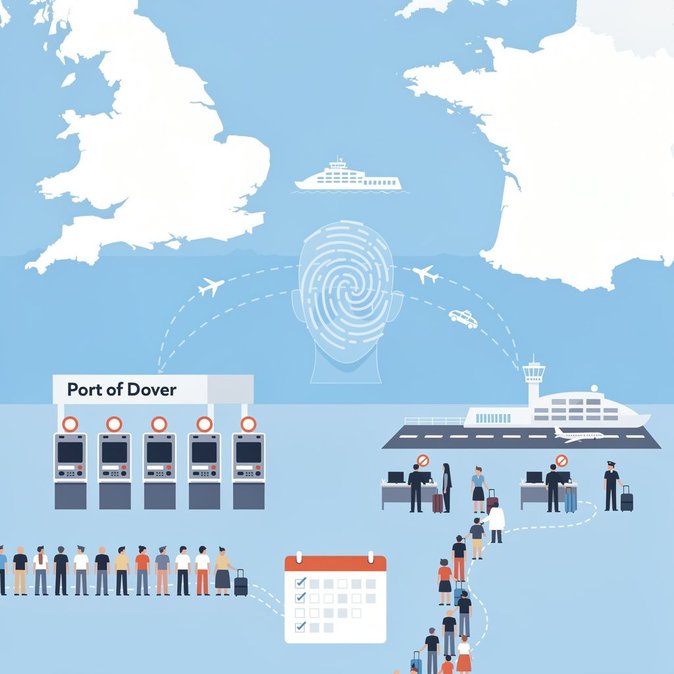
Hopes that the European Union’s new Entry/Exit System (EES) would be fully automated at the UK-France land and sea borders in time for the holiday rush were dashed this weekend. Port of Dover management told The Connexion that its £40 million facility—84 self-service kiosks designed to capture fingerprints and facial images of UK travellers bound for France—“will probably not open this summer”. The French Police aux Frontières (PAF), which operates juxtaposed Schengen controls on UK soil, is still creating passenger files manually while awaiting critical software updates. The article was published on 27 June 2026 after French airports issued similar warnings. Paris-Charles-de-Gaulle, Orly and eight regional airports (Nice, Lyon, Bordeaux, Toulouse, Nantes, Marseille, Montpellier and Strasbourg) also have rows of idle kiosks supplied by Thales. According to Gaël Léon of the Union des Aéroports Français, success rates during testing have improved, but compatibility glitches with PARAFE e-gates, passport-reader failures and missing language packs mean the machines cannot yet be deployed at scale. Under EU rules, the flexibility that currently allows border guards to suspend biometric capture when queues build up expires on 6 September. If the technology is not ready by that deadline, travel hubs fear they will have to collect fingerprints and facial images for every non-EU traveller at manual booths, a process that could treble processing times. Eurotunnel and Eurostar, which also host French exit controls in the UK, say they are “waiting for a software patch” before they can activate their own kiosks. For global-mobility teams the implications are serious. The EES not only replaces passport stamps but also enforces the 90/180-day stay rule automatically; an incorrect manual entry could trigger an overstay flag and jeopardise future visa applications. Corporates are therefore advising staff on frequent UK-France rotations to travel with printed assignment letters and to photograph exit stamps until the digital record is reliable. Travel-management companies suggest shifting some meetings from Paris to Brussels or Amsterdam if tight same-day turnarounds are essential. Meanwhile, mobility providers are lobbying the French interior ministry to publish a contingency plan, pointing out that September coincides with the back-to-school expatriate surge and major trade fairs such as Paris Nautic and SIAL.
Source: The Connexion
How VisaHQ can help
VisaHQ simplifies the visa application process for individuals and businesses. Check current travel requirements, prepare the required documents and manage your application online through the VisaHQ France portal.More From France
View all
French consulates slash multi-entry Schengen visas for Russians by 90 %, issuing mostly single-entry permits
French air-traffic controllers’ 24-hour walk-out grounds 933 flights at the start of the summer rush