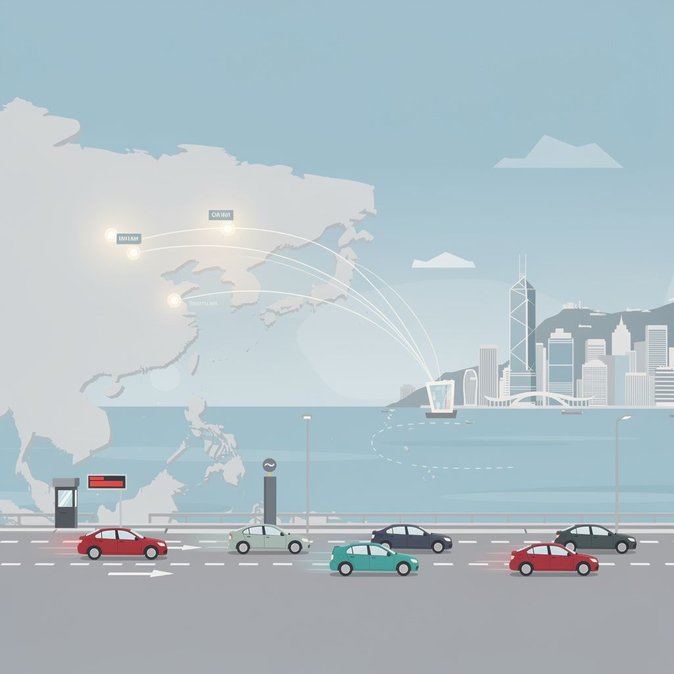
Hong Kong’s Transport Department confirmed that, from 09:00 on 29 June, motorists from Shenzhen, Foshan, Dongguan, Huizhou and Zhaoqing can formally submit applications to drive into Hong Kong under the Southbound Travel for Guangdong Vehicles (STGV) scheme. The expansion follows a joint Guangdong–Hong Kong announcement on 8 June and marks the first major widening of the programme since its launch in late-2025. STGV allows private vehicles bearing Guangdong plates to enter the Hong Kong urban area via the Hong Kong-Zhuhai-Macao Bridge (HZMB) for up to three days without the need for a traditional cross-border permit.
To manage traffic, a daily quota—now doubled to 200 vehicles—will be allocated by computer ballot. Successful applicants must carry Hong Kong third-party insurance and book a travel slot through the mainland’s online portal. The first expanded-quota crossings will occur on 25 July.
For applicants juggling multiple travel documents, a quick way to streamline the paperwork is to use VisaHQ’s online concierge service. The platform—available at https://www.visahq.com/hong-kong/—guides drivers through Hong Kong insurance requirements, electronic toll tags and, where necessary, visa or entry-permit filings, turning what can be a multi-step process into a single digital checklist.
For companies in the Greater Bay Area, the change means sales teams and technical staff can reach Hong Kong clients by car in under an hour, bypassing bus transfers at land checkpoints. Retail analysts expect a surge in weekend shopping trips that could lift Hong Kong retail sales by 1–2 percent in Q3. Logistics firms are watching closely: although commercial trucks remain excluded, officials hinted that a pilot for light-goods vehicles could follow if traffic flows remain smooth. Employers should brief mainland-based drivers on insurance proof, e-toll compatibility and the strict three-day stay limit—overstays trigger automatic suspension from future ballots. Human-resources teams may also need to update travel-expense policies to reflect the new mileage option versus rail or coach fares. The STGV webpage provides bilingual FAQs, while the Insurance Authority has posted a comparison table of approved motor policies for cross-border cover. Looking ahead, Guangdong and Hong Kong aim to extend STGV to the province’s remaining 12 cities by early 2027, eventually creating a reciprocal self-drive zone that could rival Europe’s Schengen Area in economic impact for the Pearl River Delta.
To manage traffic, a daily quota—now doubled to 200 vehicles—will be allocated by computer ballot. Successful applicants must carry Hong Kong third-party insurance and book a travel slot through the mainland’s online portal. The first expanded-quota crossings will occur on 25 July.
For applicants juggling multiple travel documents, a quick way to streamline the paperwork is to use VisaHQ’s online concierge service. The platform—available at https://www.visahq.com/hong-kong/—guides drivers through Hong Kong insurance requirements, electronic toll tags and, where necessary, visa or entry-permit filings, turning what can be a multi-step process into a single digital checklist.
For companies in the Greater Bay Area, the change means sales teams and technical staff can reach Hong Kong clients by car in under an hour, bypassing bus transfers at land checkpoints. Retail analysts expect a surge in weekend shopping trips that could lift Hong Kong retail sales by 1–2 percent in Q3. Logistics firms are watching closely: although commercial trucks remain excluded, officials hinted that a pilot for light-goods vehicles could follow if traffic flows remain smooth. Employers should brief mainland-based drivers on insurance proof, e-toll compatibility and the strict three-day stay limit—overstays trigger automatic suspension from future ballots. Human-resources teams may also need to update travel-expense policies to reflect the new mileage option versus rail or coach fares. The STGV webpage provides bilingual FAQs, while the Insurance Authority has posted a comparison table of approved motor policies for cross-border cover. Looking ahead, Guangdong and Hong Kong aim to extend STGV to the province’s remaining 12 cities by early 2027, eventually creating a reciprocal self-drive zone that could rival Europe’s Schengen Area in economic impact for the Pearl River Delta.