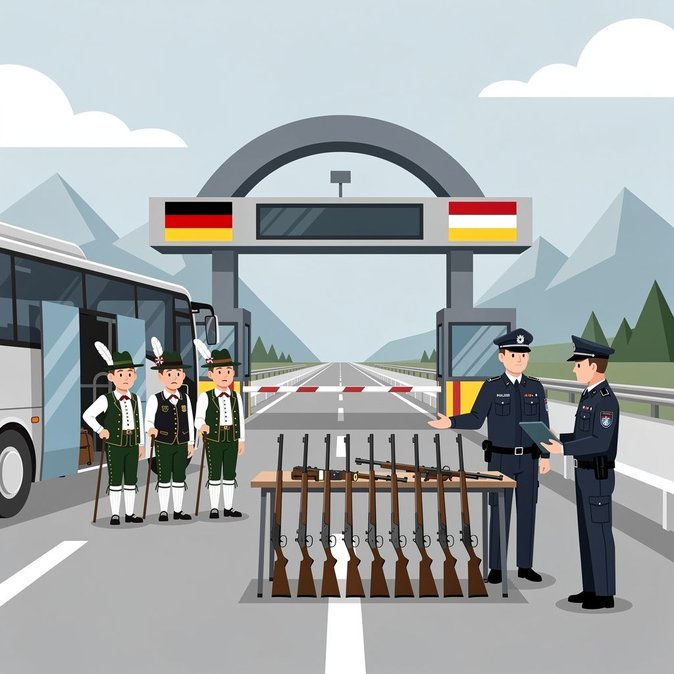
In an incident that underscores how strict Germany’s re-introduced Schengen border checks have become, federal police stopped a coach of Tyrolean “Gebirgsschützen” returning from a church parade in Salzburg and confiscated 34 historic rifles. The stop occurred on 30 June near Bad Reichenhall on the ‘Kleine Deutsche Eck’, a shortcut routinely used by Austrian traffic transiting Germany. Officers pursued the Austrian-registered bus after spotting a gun stock through the window. None of the 34 rifle-bearers could present a European firearms pass or a German transit permit, leading police to open investigations for suspected weapons offences and demand €6,800 in security deposits. The weapons—Mauser and Mannlicher carbines, some dating back to the world-wars era—will be returned only once proper paperwork is produced. Tyrolean commander Thomas Saurer called the action “unsensibel”, noting that similar cross-border outings had previously passed without incident. Bavarian politicians from the Free Voters party have meanwhile criticised the check as excessive, arguing that traditional rifle brigades pose no security threat and that tourism ties with Austria could suffer. From a compliance angle, the case is a reminder that temporary internal Schengen controls, currently extended to mid-September, apply to ceremonial as well as commercial traffic. Event organisers, tour operators and corporate shuttle providers must now verify that any sporting or historical arms carried into Germany meet the same advance-authorisation rules that apply to hunters and sports shooters. Businesses transporting exhibition equipment, prototypes or other controlled goods across the Austrian-German land border are also advised to keep Carnet ATA documents and invoices within easy reach; spot-checks have increased sharply since controls were reinstated in 2024.
Source: Merkur
How VisaHQ can help
VisaHQ simplifies the visa application process for individuals and businesses. Check current travel requirements, prepare the required documents and manage your application online through the VisaHQ Germany portal.More From Germany
View all
Berlin Immigration Office Switches Fully to Contact-Form System, Forcing HR Teams to Rethink Permit Timelines

Germany has issued 765 000 skilled-worker residence permits since 2020 – numbers accelerating sharply