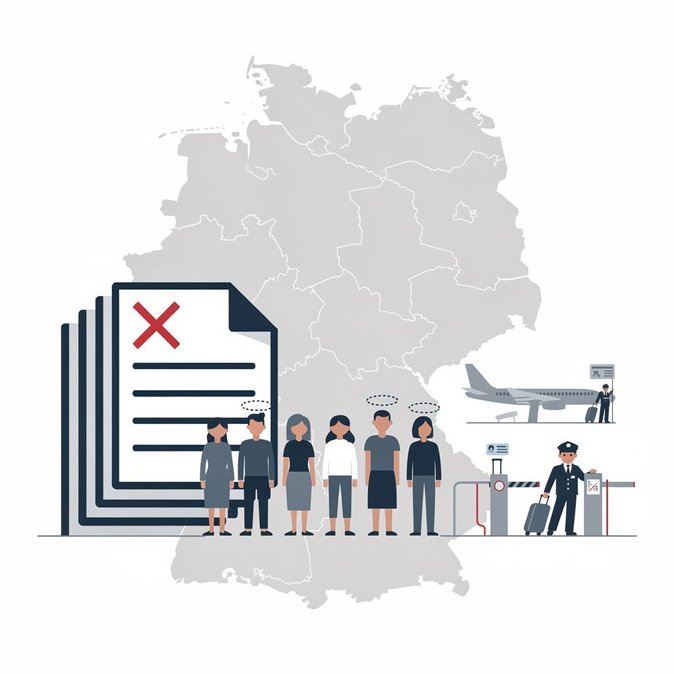
For the first time, more than a million people living in Germany have received at least one negative asylum decision, according to a federal response to an AfD parliamentary query published on 30 June. The Ausländerzentralregister recorded 1 030 864 individuals with a rejected claim as of 30 April 2026 – up 10 % in just six months and 15 % since mid-2023. The headline number does not equate to immediate deportability: only 237 588 persons are formally “obliged to leave”, and 198 220 of those hold a Duldung, a tolerated stay that suspends removal. Nonetheless, the symbolic breach of the million-mark is fuelling calls – chiefly from opposition parties – for tougher enforcement and faster asylum procedures. Legal experts caution that the registry counts every historical rejection, even if the applicant later legalised status via marriage, work or humanitarian grounds. Still, the trend underlines how decisions outpace departures, stretching accommodation budgets in several Länder. Bavaria alone spends an estimated €1,1 bn a year on accommodation and social support for rejected but remaining migrants. The Interior Ministry points to recent measures – simplified safe-country listings, digital case files and charter return agreements – that should cut the backlog by 2028. For global-mobility teams the numbers matter indirectly: federal police intensify identity checks on long-distance trains and airports whenever political pressure over “Ausreisepflichtige” rises, occasionally causing delays for legitimate travellers whose documents need closer scrutiny.
Source: Freie Welt