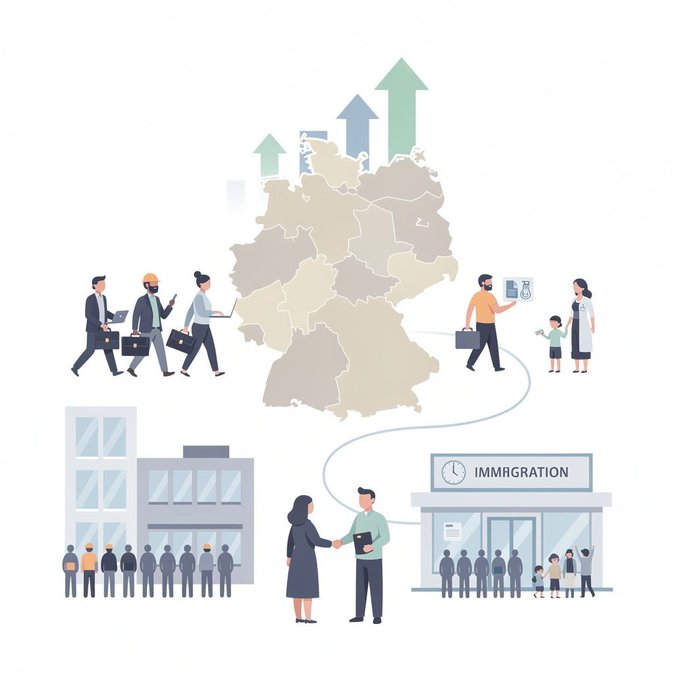
Fresh figures released in a parliamentary answer show that Germany’s post-pandemic talent drive is gaining momentum: around 765 000 third-country nationals have obtained residence permits for work or skilled migration between January 2020 and April 2026. Annual issuances jumped from 133 000 in 2023 to 157 000 in 2024 and a record 205 000 last year, before topping 75 000 in the first four months of 2026 alone. India leads the league table with 91 000 permit holders, followed by Vietnam and Turkey (35 000 each) and China (31 400). The data also reveal that 605 000 skilled migrants were physically present in Germany on 30 April, underscoring the country’s dependence on foreign talent to buffer demographic decline. Growth has been driven by 2023-24 reforms that eased degree recognition, raised the Blue-Card salary threshold for shortage occupations and created the “Opportunity Card” for jobseekers. For employers the surge is double-edged. While more visas are being granted, local foreign-registration offices complain they lack staff to issue electronic residence titles, causing onboarding delays. The Federal Employment Agency meanwhile reports that half of visa-sponsored workers join SMEs outside the big metros – evidence that the reforms are finally reaching mid-sized industry. Policy debate now turns to retention: think-tanks urge Berlin to fast-track permanent residence after three years and to expand spousal work rights to keep families from relocating onward to Canada or the UK. A second amendment package – including a points-based extension of the Opportunity Card – is expected in the Bundestag after the summer recess.
Source: MiGAZIN / dpa