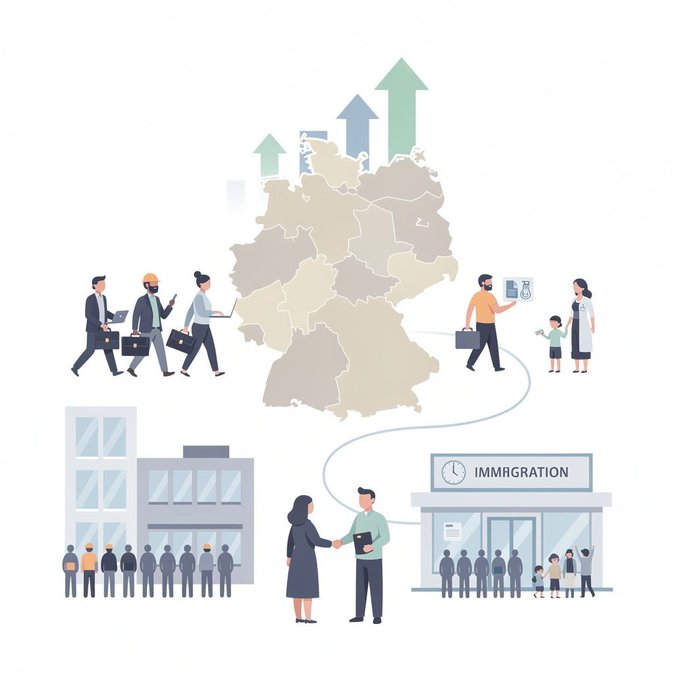
Berlin’s foreign-residents authority (Landesamt für Einwanderung, LEA) has quietly decommissioned its public online appointment calendar, making a German-language contact form the sole entry point for residence-permit applications. A Jobbatical HR advisory published on 29 June confirms that the change is permanent and already applies to Blue Card holders, ICT transferees and family-reunification applicants. Under the new process, companies must submit requests without attachments larger than 5 PDFs, routed to the correct LEA department (B1–B4 for skilled workers). Response times average 4–6 weeks, after which the authority proposes an in-person slot. Electronic residence permits (eAT cards) still take an additional 4–8 weeks to produce, extending end-to-end onboarding to as much as six months. The Business Immigration Service (BIS) remains the only fast-track lane but is limited to pre-registered employers that meet stringent compliance criteria. Start-ups and SMEs without BIS status now face a competitive disadvantage, often turning to costly relocation agencies to secure earlier dates. HR managers are advised to budget for longer lead times and to issue assignment letters that allow remote work until the physical eAT card is collected. Failure to align project start dates with the new reality risks non-compliance penalties of up to €50,000 under §404 AufenthG. Legal practitioners expect other German states to follow Berlin’s paper-less route once the federal “One-Stop-Residence-Portal” pilot goes live in 2027. Until then, mobility teams should maintain a state-by-state calendar to track divergent digitalisation speeds.
Source: Jobbatical Blog