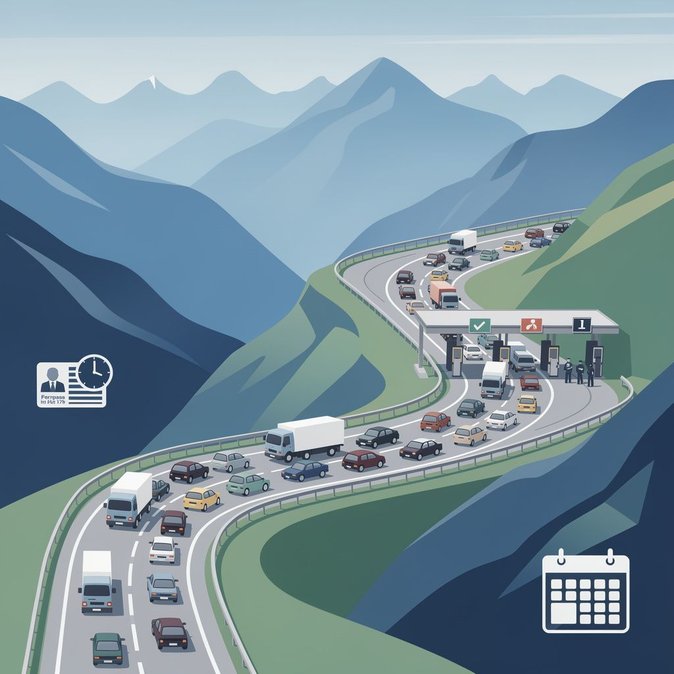
With Germany’s school holidays starting, the Fernpass B179—the key road link between Füssen (Bavaria) and the Tyrolean Alps—is already showing kilometre-long queues. A 30 June traffic bulletin warns that spontaneous German border spot-checks, block-processing of lorries and a series of Saturday protest closures could turn the pass into one of Europe’s worst bottlenecks this summer. Authorities in Tyrol plan full closures again on 1 August after a first protest blockade on 27 June sparked two-hour delays.
Before setting off, travellers should also double-check that their passports and any necessary visas are in order. VisaHQ (https://www.visahq.com/germany/) offers fast online processing for passport renewals, travel visas and real-time entry requirement updates—support that can prove invaluable now that German–Austrian frontier checks are tightening without prior notice.
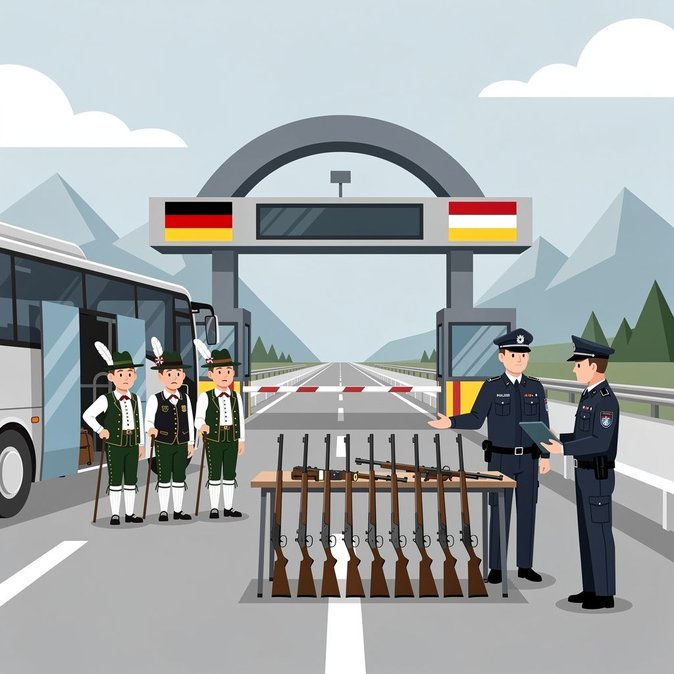
Combined with German police controls near the A7 Grenztunnel Füssen, motorists are advised to carry passports and expect vehicles to be funnelled in regulated ‘blockabfertigung’ intervals—measures primarily aimed at curbing irregular migration and protecting local villages from rat-run traffic. The stakes are high for German exporters relying on just-in-time truck deliveries to northern Italy, as the Fernpass is a free, vignette-exempt alternative to the Brenner motorway. Logistics groups caution that even 30-minute hold-ups can ripple through supply chains, while tour operators have started rerouting Munich–Lake Garda coach services via Innsbruck despite higher tolls. From a traveller-relations perspective, companies should brief employees on likely hold-ups, ensure rental-car contracts allow Austrian detours and build extra driving time into duty schedules. Tyrol’s government has published a list of ‘Ausweichverbote’—road-blocks preventing GPS diversion through small towns—that drivers must respect to avoid €300 on-the-spot fines. Long-term relief will only come with the planned 4.8-km Fernpass Tunnel, scheduled for completion in 2029, but until then the Germany–Austria alpine corridor is set for another summer of congestion and ad-hoc policing.
Before setting off, travellers should also double-check that their passports and any necessary visas are in order. VisaHQ (https://www.visahq.com/germany/) offers fast online processing for passport renewals, travel visas and real-time entry requirement updates—support that can prove invaluable now that German–Austrian frontier checks are tightening without prior notice.
Combined with German police controls near the A7 Grenztunnel Füssen, motorists are advised to carry passports and expect vehicles to be funnelled in regulated ‘blockabfertigung’ intervals—measures primarily aimed at curbing irregular migration and protecting local villages from rat-run traffic. The stakes are high for German exporters relying on just-in-time truck deliveries to northern Italy, as the Fernpass is a free, vignette-exempt alternative to the Brenner motorway. Logistics groups caution that even 30-minute hold-ups can ripple through supply chains, while tour operators have started rerouting Munich–Lake Garda coach services via Innsbruck despite higher tolls. From a traveller-relations perspective, companies should brief employees on likely hold-ups, ensure rental-car contracts allow Austrian detours and build extra driving time into duty schedules. Tyrol’s government has published a list of ‘Ausweichverbote’—road-blocks preventing GPS diversion through small towns—that drivers must respect to avoid €300 on-the-spot fines. Long-term relief will only come with the planned 4.8-km Fernpass Tunnel, scheduled for completion in 2029, but until then the Germany–Austria alpine corridor is set for another summer of congestion and ad-hoc policing.