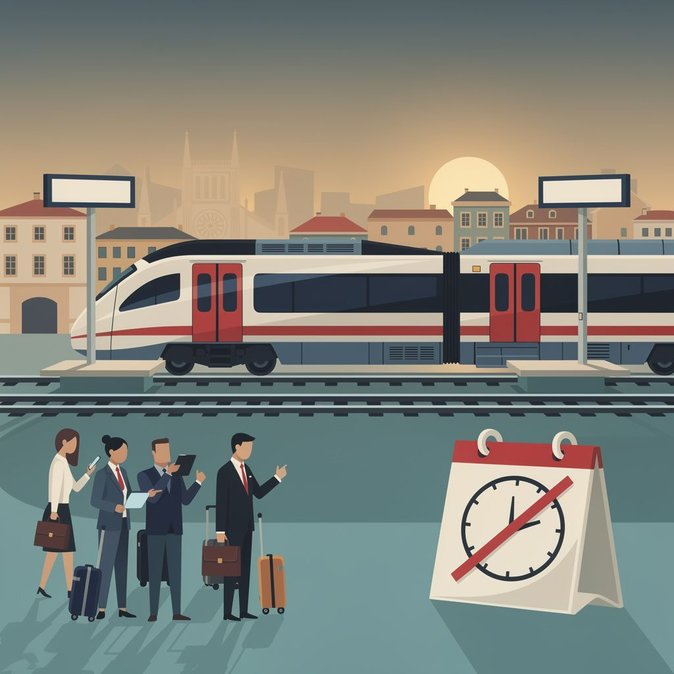
Spain’s railway operator Renfe scrapped 320 services on Monday 29 June after the Sindicato Ferroviario staged a 24-hour strike over the future of freight subsidiary Renfe Mercancías. Government-mandated minimum service levels kept 73 % of high-speed and long-distance trains and 65 % of medium-distance trains running, but commuter (Cercanías) cuts of up to 50 % caused crowding in Madrid, Barcelona and Valencia stations. Although Renfe reported only 1.8 % workforce participation, the walkout coincided with the start of Spain’s summer exodus, forcing thousands to rebook or claim refunds. The operator offered free changes or cancellations, but business travellers complained of missed connections and overnight accommodation costs not covered by EU passenger-rights rules for strikes. The union has already called a second 24-hour strike for Wednesday 15 July – peak holiday season. If confirmed, the Ministry of Transport is likely to impose similar minimum-service quotas, but HR and travel managers should expect sporadic cancellations across AVE, Alvia and Media Distancia services. Privately run high-speed operators Ouigo and Iryo are not part of the dispute but share track slots, so cascading delays are possible. Risk-mitigation steps include booking flexible fares, adding buffer nights before critical meetings, and monitoring Renfe’s “Estado del Tráfico” feed on the day of travel. Companies with travel-policy caps should also clarify that forced airline replacements are allowable expenses during industrial action.