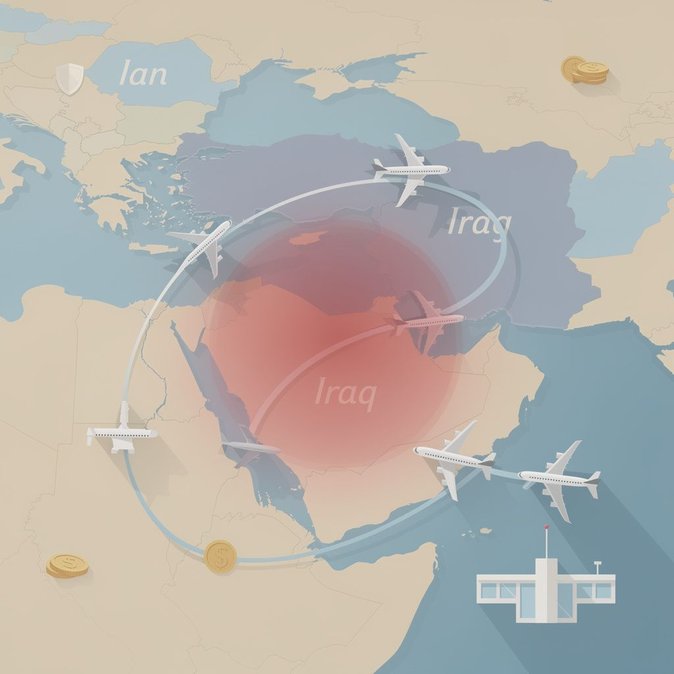
The European Union Aviation Safety Agency (EASA) has prolonged its Conflict Zone Information Bulletin covering the airspace of Iran, Iraq and Lebanon until 8 July 2026. The advisory urges EU and third-country operators to continue avoiding the Tehran, Baghdad and Beirut FIRs and to exercise “extreme caution” on adjacent routings that funnel traffic over the UAE, Bahrain and Qatar. EASA cited “ongoing uncertainty” despite a US–Iran ceasefire, noting that Iran’s air-defence units remain on high alert, increasing the risk of mis-identification. While the Emirates FIR (OMAE) is not subject to a no-fly recommendation, carriers are reminded that rapid reroutes may be required if hostilities flare. The extension means European airlines must keep longer south-of-Gulf routings, adding up to 25 minutes and extra fuel burn on key DXB, AUH and DWC services to Europe. Travel buyers should expect dynamic flight-time adjustments and occasional schedule retimes over the next week. Insurers confirm that war-risk premiums for flights using UAE hubs remain elevated but below March peaks. UAE authorities continue to coordinate with IATA and neighbouring FIRs on contingency corridors, including pre-cleared Level 340 and Level 360 tracks over the Arabian Sea for westbound departures. Operators are advised to keep crew briefings updated daily and file two contingency flight plans with Eurocontrol’s Network Manager. For multinational mobility teams, the headline is resilience: have back-up meeting schedules for Europe-bound executives and consider virtual attendance as airlines juggle slot allocations at congested European hubs.
Source: Arab Times