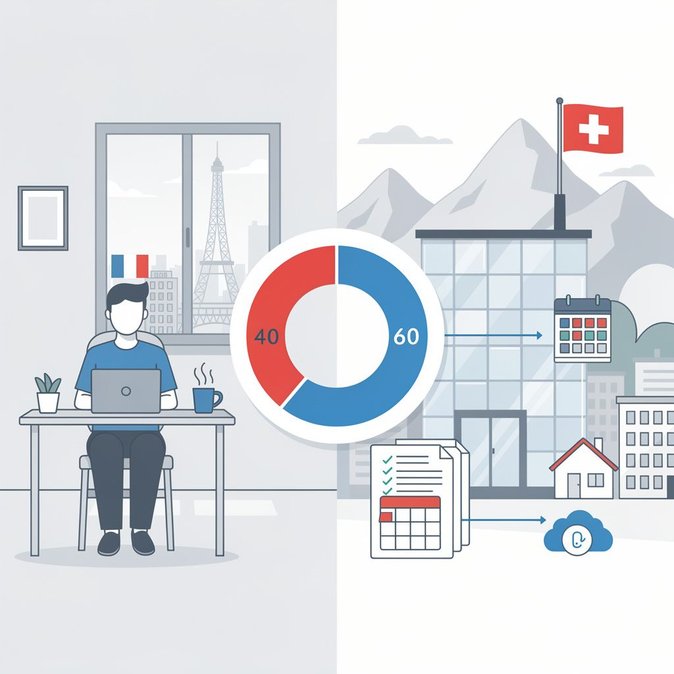
PwC’s Worldwide Tax Summaries portal was updated on 1 July to reflect the practical rollout of the permanent telework article in the Franco-Swiss double-taxation agreement (DTA). The refreshed ‘Significant Developments’ section confirms that, from the 2026 tax year, cross-border commuters may work up to 40 % of their annual schedule from their French residence without shifting the taxation of their employment income away from Switzerland. The clarification matters for the roughly 200,000 French residents who cross the border daily to work for Swiss employers in Geneva, Vaud, Valais and Basel. Under the new rules, the employer must issue an annual certificate detailing the exact percentage (or number of days) of home-office work. Swiss tax authorities will automatically share that information with France by 30 November of the following year, introducing unprecedented data transparency that will allow French tax offices to spot over-threshold remote-work cases. For companies running international assignment programmes or hiring ‘frontaliers’ in hybrid roles, the PwC note highlights three compliance touch-points: payroll systems must track home-office days precisely; HR must educate managers that only ten business-travel days outside the home-work pattern are tolerated before the 40 % ceiling erodes; and global-mobility teams must coordinate with social-security advisers because the DTA update does not alter A1 certificate rules. A separate multilateral agreement lets eligible employees perform up to 49.9 % cross-border telework while staying insured in the employer’s country, but only where both states have signed the accord. Beyond payroll, the 40 % rule has knock-on effects for expense policies and works-council agreements. Employers that previously reimbursed French income tax for excessive telework days will see cost relief, whereas those relying on loose time-tracking will need new digital tools. PwC warns that automatic information exchange from 2027 will dramatically shorten the audit cycle, exposing inattentive firms to back-tax assessments and penalties on both sides of the border. The update also notes that Switzerland’s March 2026 referendum approved individual taxation, meaning married couples will file separate returns in future. While the law will not take effect before 2028, mobility specialists should begin modelling net-pay impacts on dual-income assignees, particularly where one spouse works partly from France.
Source: PwC Worldwide Tax Summaries