The World Travel & Tourism Council (WTTC) today echoed airlines’ and airports’ concerns that the Schengen Entry/Exit System (EES)—due to go live in October—could trigger three-hour passport queues unless member states accelerate preparations. In a statement dated 1 July 2026, the council called for immediate investment in reliable kiosks, adequate border staffing and a traveller-education campaign centred on the "Travel to Europe" mobile app.
VisaHQ, a global visa-processing platform, can help both individual travellers and corporate mobility managers stay ahead of these new EES requirements. Its France-specific portal (https://www.visahq.com/france/) tracks rule changes in real time, offers step-by-step guidance on biometric enrolment and app registration, and even arranges group submissions—services that can spare travellers the very delays WTTC is warning about.
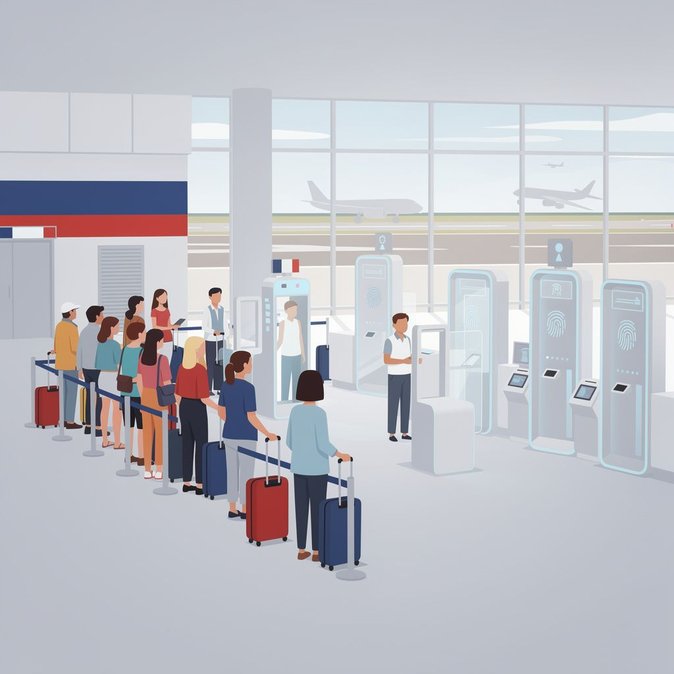
French airports, especially Paris-Charles-de-Gaulle and Paris-Orly, process more than 100,000 non-EU passengers per day in peak season. Operators fear that glitches in biometric capture could snarl connecting itineraries and jeopardise the country’s reputation ahead of the 2027 Rugby World Cup. WTTC analysis suggests Europe could forfeit up to 41 million arrivals and $45.4 billion in visitor spending in 2027 if chronic delays ensue. France’s interior ministry says 60 % of border booths are already equipped for EES, yet airline associations complain that operational tests have been limited and that procedures for crew, minors and dual-EU passport holders remain unclear. Business-aviation users worry that general-aviation terminals, often staffed by ground-handling agents rather than police aux frontières, risk becoming pinch-points. Global-mobility teams should watch for imminent guidance on group pre-registration and consider staggering itineraries for large assignment kick-offs after Q4 2026. Employers may also need to update travel-policy language on minimum connection times at French hubs.
VisaHQ, a global visa-processing platform, can help both individual travellers and corporate mobility managers stay ahead of these new EES requirements. Its France-specific portal (https://www.visahq.com/france/) tracks rule changes in real time, offers step-by-step guidance on biometric enrolment and app registration, and even arranges group submissions—services that can spare travellers the very delays WTTC is warning about.
French airports, especially Paris-Charles-de-Gaulle and Paris-Orly, process more than 100,000 non-EU passengers per day in peak season. Operators fear that glitches in biometric capture could snarl connecting itineraries and jeopardise the country’s reputation ahead of the 2027 Rugby World Cup. WTTC analysis suggests Europe could forfeit up to 41 million arrivals and $45.4 billion in visitor spending in 2027 if chronic delays ensue. France’s interior ministry says 60 % of border booths are already equipped for EES, yet airline associations complain that operational tests have been limited and that procedures for crew, minors and dual-EU passport holders remain unclear. Business-aviation users worry that general-aviation terminals, often staffed by ground-handling agents rather than police aux frontières, risk becoming pinch-points. Global-mobility teams should watch for imminent guidance on group pre-registration and consider staggering itineraries for large assignment kick-offs after Q4 2026. Employers may also need to update travel-policy language on minimum connection times at French hubs.