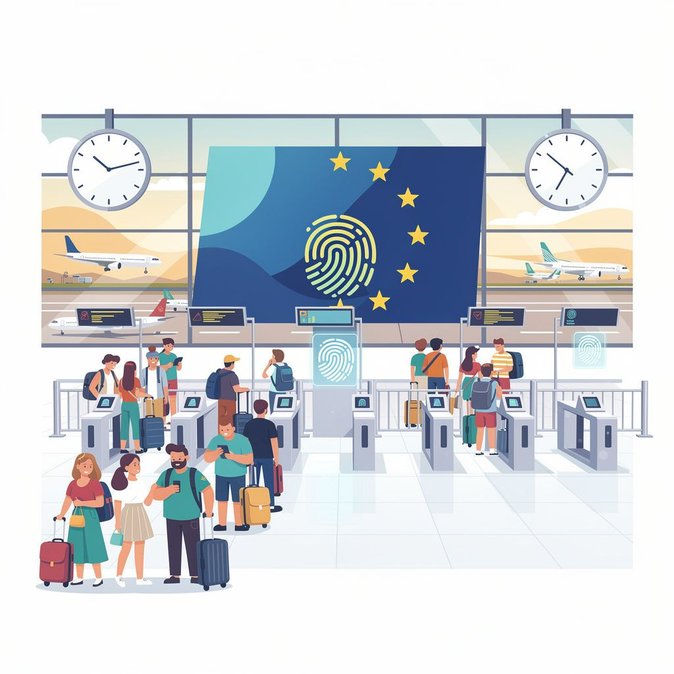
Italian travellers and the millions of international visitors who funnel through Rome-Fiumicino and other major hubs woke up on 1 July to yet another morning of multi-hour passport queues. The cause is the European Union’s new biometric Entry-Exit System (EES), in force since April but now colliding with the summer peak. The system requires every non-EU passenger to register four fingerprints and a facial image on first entry into Schengen—an extra step that border police say adds 45-60 seconds per traveller and quickly snowballs when wide-body flights land back-to-back. By midday, Aeroporti di Roma was warning of waits “up to five hours” for some long-haul arrivals. Airlines for Europe (A4E), ACI Europe and IATA jointly wrote to the European Commission urging it to suspend the biometric capture requirement until the end of the holiday season, arguing that “queues are already deterring passengers from choosing European destinations and damaging the region’s reputation for connectivity.” Greece has already paused fingerprint collection for British tourists; France has partly suspended the process at the Dover maritime border, and insiders say Spain is considering similar relief if congestion worsens. The Italian Interior Ministry acknowledges the strain but says staffing levels were calculated on 2025 volumes and that it is “too early” to alter a security system agreed by all 27 member states. Fiumicino’s operator, meanwhile, is installing 70 additional self-service kiosks and redeploying ground staff to guide passengers, yet warns that hardware alone cannot solve the pinch point at manual verification booths. Trade-union representatives for border police add that their members are “exhausted” and have not received the promised overtime budget. For corporate travel managers the situation poses immediate operational risk. Missed connections have jumped sharply this week, forcing rebooking, duty-of-care interventions and increased accommodation costs. Experts recommend advising travellers to allow at least four hours between intercontinental arrival and any onward domestic or Schengen flight, and to complete airline advance passport information (API) to shave seconds off manual checks. The Commission is expected to respond formally next week, but insiders say a temporary derogation—similar to the pandemic waiver on fingerprinting—remains on the table if member-state pressure intensifies. With ETIAS pre-travel authorisation still scheduled for Q4 2026, resolving today’s bottleneck is seen as crucial to maintain business confidence in Europe’s next wave of border-technology upgrades.
Source: Quotidiano Nazionale