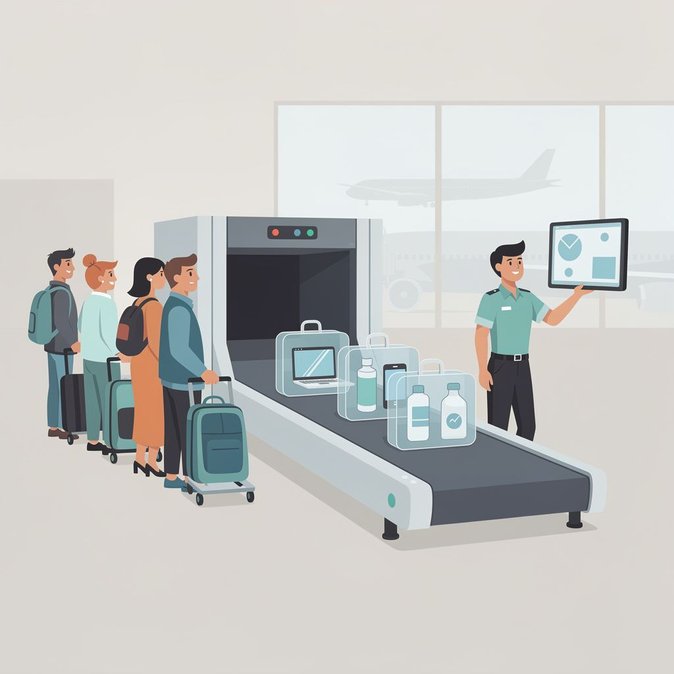
Business travellers passing through Vienna International Airport (VIE) will notice a radically faster security experience from 3 July. The airport has completed a €25 million roll-out of 35 Computed-Tomography scanners across all central checkpoints, allowing passengers to keep electronics and liquids—now up to two litres total—in their hand luggage. Similar to hospital CT machines, the scanners create high-resolution 3-D images, while AI-based algorithms highlight potential threats for screeners. The technology slashes bottlenecks just as the summer peak begins. Vienna Airport board member Julian Jäger notes that average wait times are already about five minutes; the new equipment should make VIE one of the first major European hubs to meet future EU standards that will eventually phase out the 100-ml liquid rule. For corporate mobility programmes the change means simpler packing guidelines and fewer missed connections. Travellers heading to non-EU destinations, however, must remember that the relaxed liquid limit applies only on departure from Vienna; onward airports may still enforce legacy rules. Travel managers should update pre-trip briefings and ensure travellers retain receipts for liquids purchased air-side if transiting elsewhere in the Schengen area. The move also future-proofs Vienna against the EU Entry/Exit System, which has increased pressures at border desks since April. By shifting screening work from passengers to machines, VIE frees staff to focus on secondary inspections and biometric enrolment, reinforcing Austria’s position as a business-travel gateway to Central & Eastern Europe. Airlines welcome the upgrade: faster gateways allow tighter block times and better on-time performance, reducing crew costs. Multinationals with Austrian headquarters should see improved traveller satisfaction scores and potentially lower insurance premiums tied to trip disruption metrics.