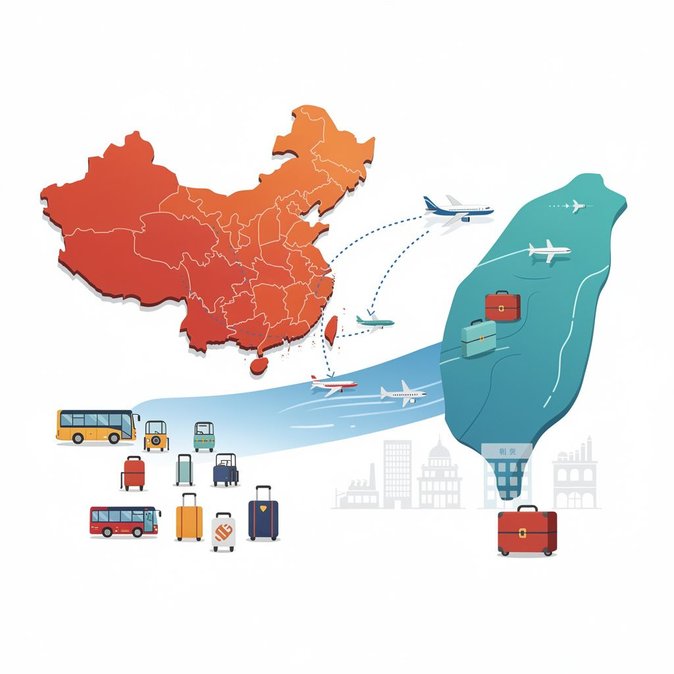
At a regular press conference on July 2, China’s State Council Taiwan Affairs Office (TAO) renewed calls for the Taiwanese authorities to remove restrictions that prevent mainland Chinese residents—especially those from Shanghai and Fujian—from visiting the island for leisure and business purposes. Spokeswoman Zhu Fenglian described the denied applications for so-called “inspection tours” (踩线团) as “a typical case of political manipulation” and said tourism exchanges should not be used as a bargaining chip. The TAO stressed that the groups were routine industry visits meant to check hotels, restaurants and itineraries ahead of the anticipated resumption of packaged tours. Cross-strait tourism collapsed at the onset of the pandemic and has only partially resumed through pilot programmes that allow Fujian and Shanghai residents to visit Kinmen, Matsu and, more recently, Penghu. According to China’s National Immigration Administration, those small-scale schemes generated more than 600,000 passenger movements in the first half of 2026, but overall mainland visitor arrivals to Taiwan are still running at less than 15 % of pre-2019 levels. Taiwanese travel businesses, hard-hit by four years of lost revenue, have openly lobbied for a broader reopening and accuse Taipei of “deliberately politicising tourism”. For Beijing, full restoration of outbound group travel to Taiwan serves several objectives: it promotes people-to-people exchanges, supports coastal provinces whose economies are closely linked to the island, and adds diplomatic pressure on the new Lai Ching-te administration, which has taken a more cautious stance on cross-strait engagement. Industry analysts note that tour operators in Xiamen, Quanzhou and Shanghai have already prepared marketing campaigns and charter-flight schedules and could resume mass departures within four to six weeks once the green light is given. From a business-mobility perspective, the reopening would be a significant boost. Roughly 3,000 mainland enterprises maintain branches or suppliers in Taiwan’s semiconductor, bicycle-parts and precision-machinery clusters. Executives currently rely on complicated visa facilitation letters and limited seat availability via Hong Kong to conduct site visits. Direct leisure and MICE (meetings, incentives, conferences and exhibitions) traffic would restore cost-effective connectivity and help fill the 170 cross-strait weekly flights that remain suspended. Practical tip: Mainland companies with Taiwan footprints should monitor TAO briefings and, in the meantime, keep using the existing Kinmen/Matsu “mini-three-links” route for essential staff travel. HR teams should prepare training on Taiwan’s Electronic Gate (e-Gate) programme, which offers automated entry for preregistered frequent travellers and could shorten airport wait times once restrictions are lifted.
Source: The Paper