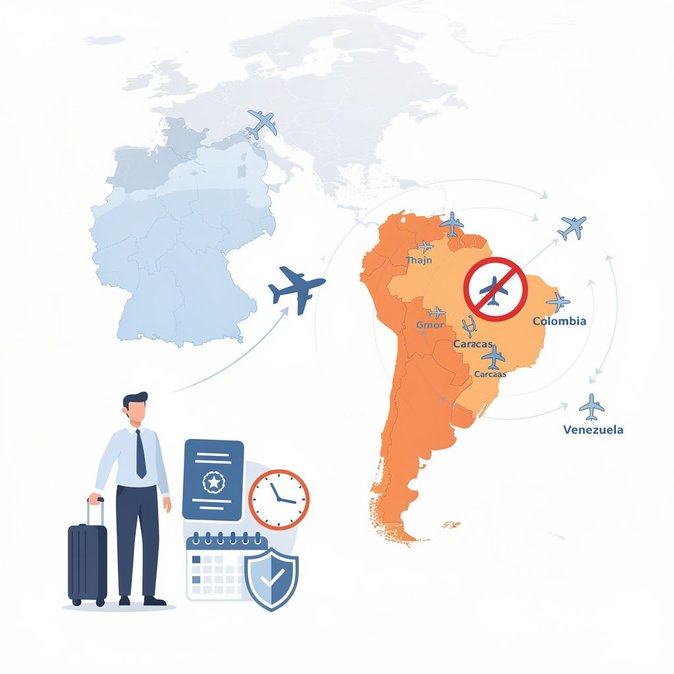
The German Foreign Office on 2 July issued a fresh advisory after Venezuela extended the closure of Simón Bolívar International Airport (CCS) near Caracas. Heavy storm damage to runways and terminal infrastructure means only humanitarian and special-permit flights are operating until “at least the end of July 2026.”
Travel planners who need help navigating Venezuela’s visa formalities—or any other global entry requirements—can streamline the paperwork through VisaHQ’s Germany portal (https://www.visahq.com/germany/). The online platform guides applicants step by step, offers document-checking services, and provides real-time status updates, reducing the need for time-consuming trips to the consulate.
Germans currently in Venezuela are urged to register with the ‘Elefand’ crisis portal and consider overland exit via Colombia. Lufthansa and Iberia suspended their mid-July repatriation charters, while Condor re-routed its Frankfurt–Caracas seasonal service to Maracaibo (MAR), 660 km west, pending repairs. For mobility managers, the closure complicates short-notice crew changes in the oil and engineering sectors. German EPC contractor Voith Hydro confirmed delays returning turbine specialists from the Guri Dam site, adding extra hotel and security costs. Firms should factor multi-leg routings—Miami or Panama City to Valencia (VLN) by domestic carrier—into travel times. Insurance giant Allianz now classifies Venezuela as ‘heightened risk’ for extraction coverage, triggering mandatory pre-approval for any deployments exceeding 14 days. Meanwhile, the advisory warns that nationwide fuel scarcity and sporadic protests could impede overland evacuation. Embassy officials emphasise that entry requirements remain unchanged: German citizens still need a visa prior to arrival, obtainable only from the Venezuelan consulate in Frankfurt. However, processing has slowed to two weeks due to staff shortages; companies should submit applications early or explore remote-work alternatives.
Travel planners who need help navigating Venezuela’s visa formalities—or any other global entry requirements—can streamline the paperwork through VisaHQ’s Germany portal (https://www.visahq.com/germany/). The online platform guides applicants step by step, offers document-checking services, and provides real-time status updates, reducing the need for time-consuming trips to the consulate.
Germans currently in Venezuela are urged to register with the ‘Elefand’ crisis portal and consider overland exit via Colombia. Lufthansa and Iberia suspended their mid-July repatriation charters, while Condor re-routed its Frankfurt–Caracas seasonal service to Maracaibo (MAR), 660 km west, pending repairs. For mobility managers, the closure complicates short-notice crew changes in the oil and engineering sectors. German EPC contractor Voith Hydro confirmed delays returning turbine specialists from the Guri Dam site, adding extra hotel and security costs. Firms should factor multi-leg routings—Miami or Panama City to Valencia (VLN) by domestic carrier—into travel times. Insurance giant Allianz now classifies Venezuela as ‘heightened risk’ for extraction coverage, triggering mandatory pre-approval for any deployments exceeding 14 days. Meanwhile, the advisory warns that nationwide fuel scarcity and sporadic protests could impede overland evacuation. Embassy officials emphasise that entry requirements remain unchanged: German citizens still need a visa prior to arrival, obtainable only from the Venezuelan consulate in Frankfurt. However, processing has slowed to two weeks due to staff shortages; companies should submit applications early or explore remote-work alternatives.